Filter
Showing the single result
-
Rated 5.00 out of 5
$130.00
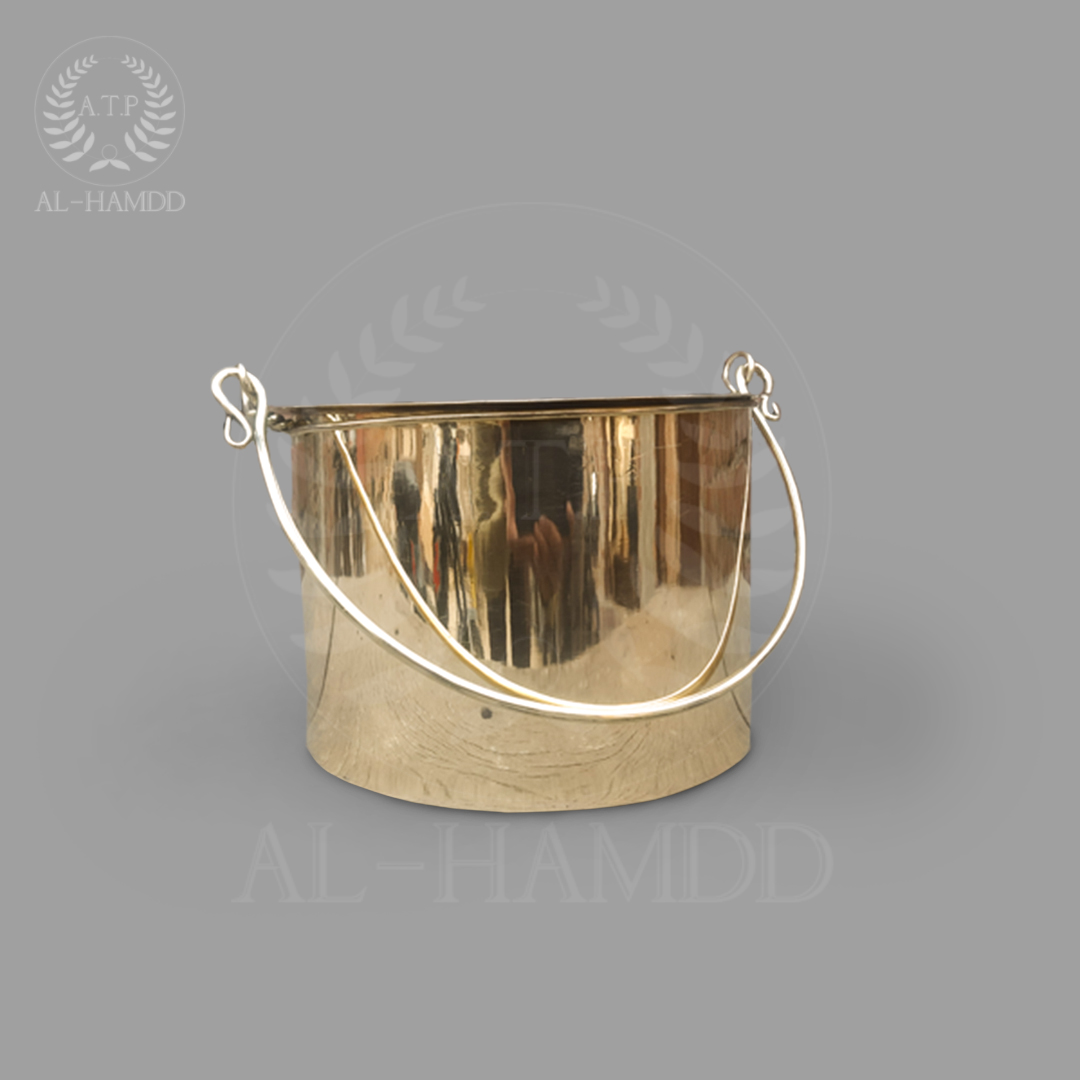
Key Points-
Period – II-III century AD
Height – 15cm
Mouth diameter – 19cm
Gross weight – 2.9 pounds
Capacity – 4 Ltrs. / 4000 Cubic cm.
Base Material – Brass | Also available in Bronze
The Roman Situla, often referred to as a “boiling bucket,” was a versatile and practical vessel widely used in ancient Roman daily life as well as in military settings. Characteristically shaped like a deep bucket with a sturdy handle, the situla was designed to withstand direct heat, making it particularly suitable for boiling water, preparing broths, and cooking simple meals. Its portability and durability made it an essential utensil for Roman soldiers, especially officers and legionaries, who relied on such equipment during long campaigns and camping expeditions.
The origins of the situla can be traced even further back to earlier civilizations, particularly to the Greek and Etruscan cultures, where similar bucket-shaped vessels have been discovered in archaeological findings. These early versions were not merely utilitarian objects but also held artistic and ceremonial significance. Many situlae were intricately decorated with relief figures, detailed engravings, and hand-painted designs that often depicted mythological scenes, daily life, or symbolic motifs.
Over time, the situla evolved into both a functional and decorative artifact, reflecting the craftsmanship and aesthetic sensibilities of ancient societies. While its primary role remained rooted in cooking and storage, its artistic embellishments suggest that it also held a place in social and ceremonial contexts. Today, the Roman situla stands as a testament to the ingenuity and cultural richness of ancient civilizations, bridging the gap between practical utility and artistic expression.