-
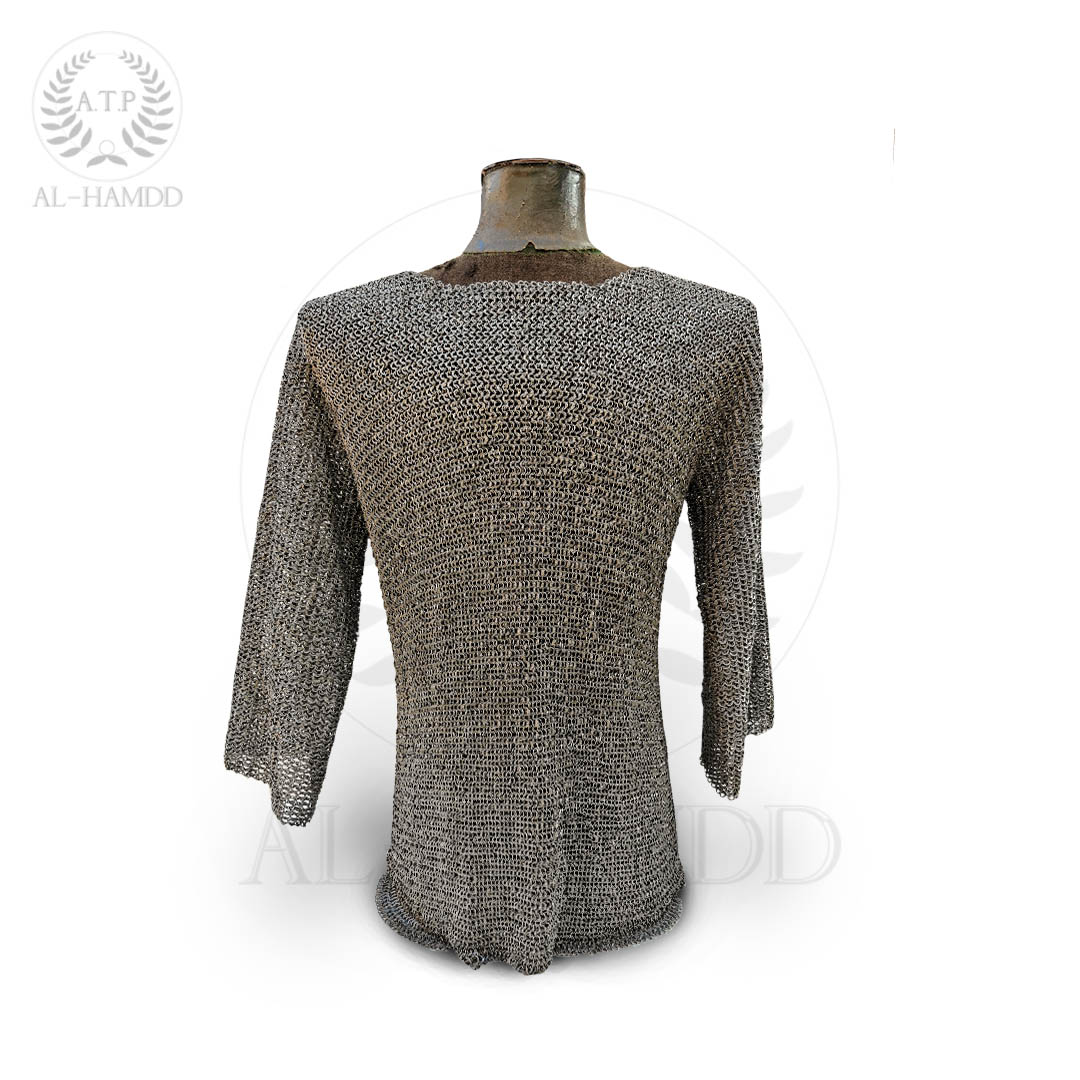
6mm ID Hauberk | Riveted Roman Chainmail Shirt
Price range: $315.00 through $350.00This product has multiple variants. The options may be chosen on the product pageKey Points –
– ‘Made-to-Order’ – Dispatch in two weeks.
– Prices are ‘Inclusive of Shipping’.
– 18g Mild steel.
– 6mm ID round wire riveted rings with 6mm ID washers in a one-to-four ratio.
– Coated with oil to prevent rusting.
– Crew neck long shirt with sleeves.
– Available in four sizes. Refer to our size guide.Description –
The replica of a Late Roman 6mm ID Hauberk was especially designed to provide better torso protection to the wearer. The riveted rings attached to washers create an impenetrable layer against sword attacks. It is a medium-to-long shirt (refer to our size guide) for Roman era reenactors who use this under plate armor. -

6th Century Bell Cuirass | Greek Bell Cuirass
Price range: $330.00 through $450.00This product has multiple variants. The options may be chosen on the product page6th Century Bell Cuirass is a special piece of body armor that is believed to have been used between the 4th and 6th centuries. It is an inspiration from the famous and widely used Greek Bell Armor and has similar features. The abdominal curve is very similar to a Greek bell cuirass but it flares outside more than the original bell armor. The Pectoral muscles also have embossed spirals in the same shape as the abdomen, it gives the cuirass a well-defined style. The collar is added to the neck to give an additional aesthetic to the cuirass.
Our replica has hinges and rings on both sides but it can also be made with fixed hinges on the right-hand side only. The left side has overlapping front and back plates, fixed tubes through which pins go to fasten the cuirass tightly.
-
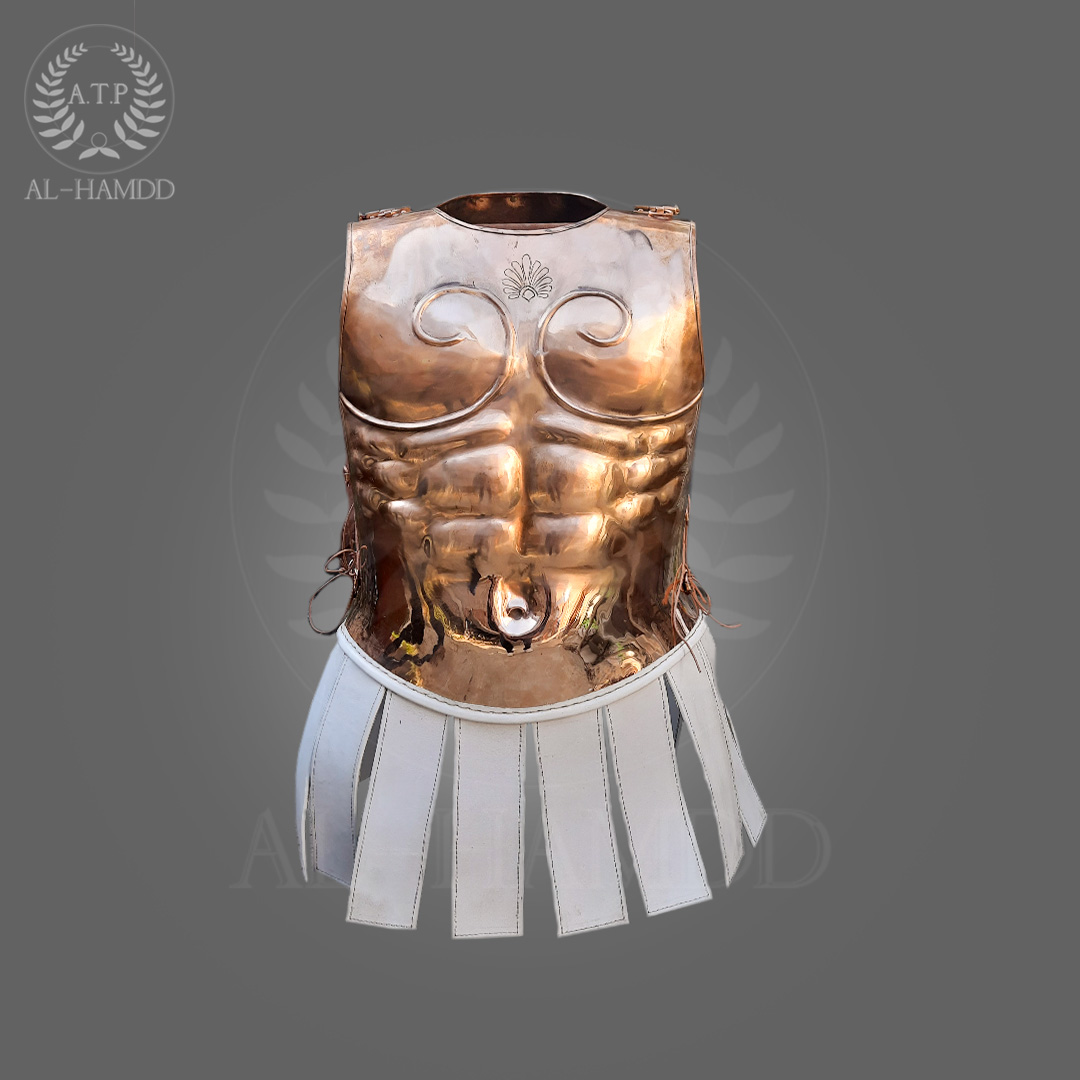
Anatomical Muscle Cuirass | Palermo Museum Replica Cuirass
Price range: $375.00 through $499.00This product has multiple variants. The options may be chosen on the product pageKey Points –
– ‘Made-to-Order’
– Tailor-Made Armor available
– Our armor closely fits a chest size of 100-105cm.
– Length (without Pteruges) – 55cm
– Length (with Pteruges) – 75cmDescription –
The Anatomical Muscle Cuirass was used during the Late Greek period by the Hoplite warriors. This type of armor is shown in one of the vases showcased in the Palermo Museum. The armor was designed to show/highlight the natural muscle structure of the human body. The overall design of human muscles varies in different designs of the armor but follows the root idea. Our replica has muscles in the front as well as the back. The rear of the armor does not have any projecting muscles but the overall shape reflects a human body shape. -

Anglo-Saxon Broken Back Seax
$40.00The Anglo-Saxon Broken Back Seax dagger dates back to the 6th century and is believed to have been used by the Saxons of the Germanic tribes. It was used as a small close combat weapon and was also used as a daily utility knife. There are different types of seax daggers, the remains of which are found in different parts of Europe. They differ in length, width, and size. The handles are made as an assumption of their historical context; only the blades were found in the originals.
-

Apulian Corinthian Helmet | Italian origin helmet
Price range: $200.00 through $300.00This product has multiple variants. The options may be chosen on the product pageKey Points –
– Engraving of animal figurines. Rhinoceros and Wolves on either side.
– Embossed eyebrows
– Unique square feather tubes
– Removable crest holder with a slide-in hook.Description –
The Apulian Corinthian Helmet is believed to have been found in the Italian provinces, as suggested by the geographical locations of the historical finds. The helmet was worn over the head, pulling it in front from the back. The shape of the helmet suggests that it was used primarily for decorative purposes, as it did not provide any protection to the user’s head. The helmet is inspired by the Corinthian helmet but it has animal figurines engraved on the front. The helmet is also seen in some Hellenic and Etruscan ceremonies but it has its roots in the Greek era only. -

Attic Style Helmet | Greek reenactment helmet
$175.00The Greek Attic Helmet is an inspiration from the historical findings found at the excavation site of Mound Grave, Gravani, Romania. The Attic helmet is believed to have been used by the militiamen during their expeditions. These types of helmets were simple and therefore were less expensive and required less maintenance. The helmet has a rather hemispherical shape, the central joint of the helmet makes it very slightly flat on the top. The attic helmet has a combination of an elongated visor and a predominant pediment running on both sides. Currently, the original helmet artifact is on display at the Braila Museum in Romania.
-
Sale!

Balkan Ridged Helmet | Roman Reenactment
Price range: $150.00 through $200.00This product has multiple variants. The options may be chosen on the product pageKey Points –
– Hand-crafted
– Head size – 19x23cm
– 1.2mm / 18g sheet metal
– Riveted hinges for cheek guards and neck guardDescription –
The Balkan Ridged Helmet is a close match to other ridged helmets from the Balkan region. It has articulated cheek guards with a double-embossed rim band. Such helmets are believed to have been used during the III and IV centuries AD. It is an infantry helmet with a simple and robust design. The cheek guards are hammered outward to provide protection as well as optimum ventilation to the user. The nasal guard of the helmet, in comparison to the other Serbian finds, is shorter and sleek. Rings are provided on the inside of the cheek guards for leather thongs. -
Sale!
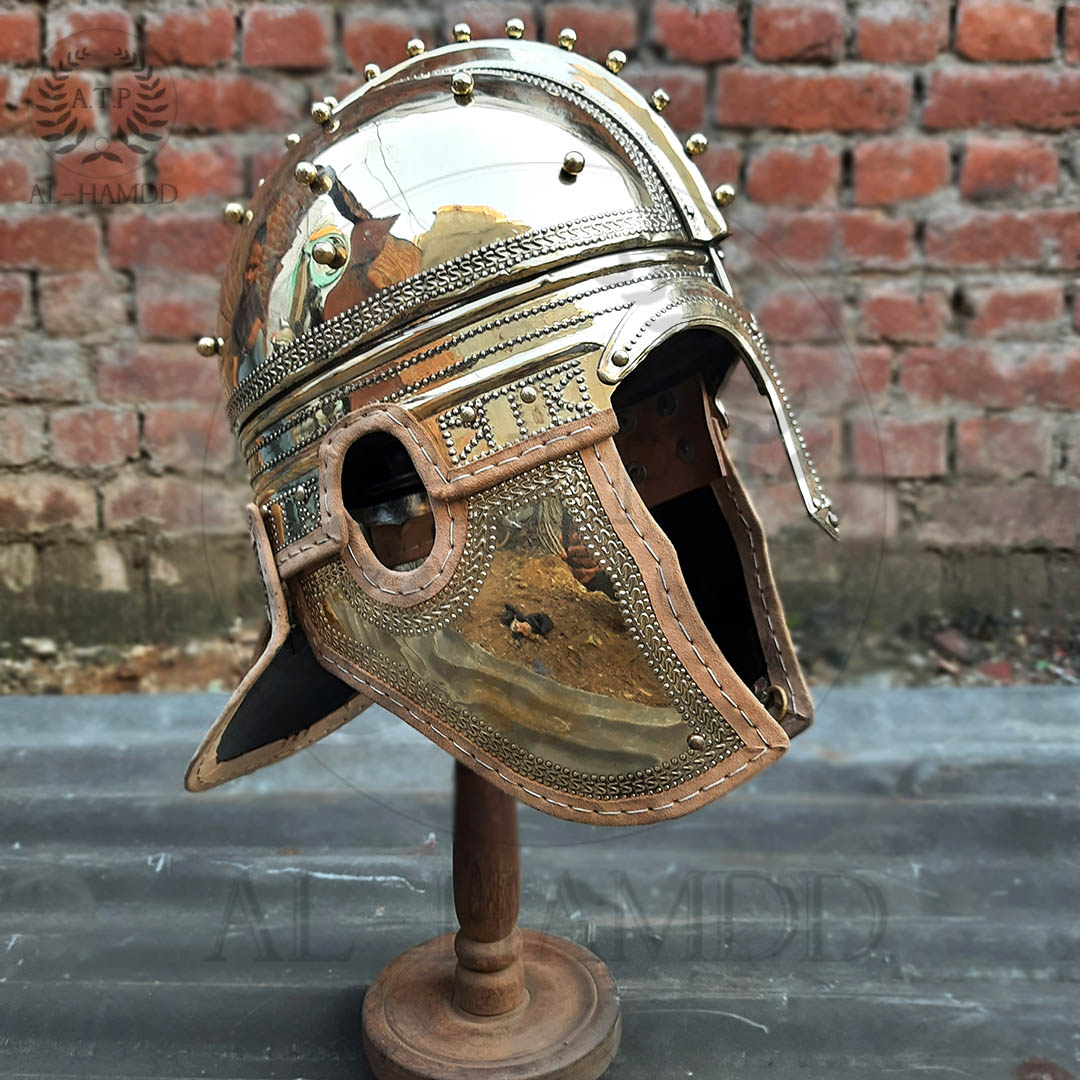
Berkasovo II helmet | Roman Era Replica Helmet
Original price was: $349.00.$299.00Current price is: $299.00.Key Points –
– 1mm steel core and 1mm embossed brass overlay
– Uncolored Goat leather for edge lining
– Detachable neck protector
– Painted black on the insideDescription –
The Berkasovo II helmet is the second of the two helmets found in the Berkasovo region in Serbia. The original finds of both helmets are showcased in the Vojvodina Museum in Serbia. These were cavalry helmets specifically made for high-ranking officers of the Roman army or the people with a higher status in society, among other countrymen. The original finds of the helmet show the possible use of a silver bowl gilded in gold. The bulbous rivets were made of silver and helped attach both layers of metal. -

Berkasovo-type decorated helmet | Steel
$175.00The Berkasovo-type decorated steel helmet is a replica helmet inspired by the Berkasovo II helmet. The two original helmets were found in the Berkasovo region in Serbia. The original finds of both helmets are showcased in the Vojvodina Museum, in Serbia. These were cavalry helmets and were specifically made for high-ranking officers of the Roman army or the people who had a higher status in society among other countrymen. The original finds of the helmet show the possible use of a silver bowl gilded in gold. The bulbous rivets were made of silver and they helped in attaching both layers of metal.
-
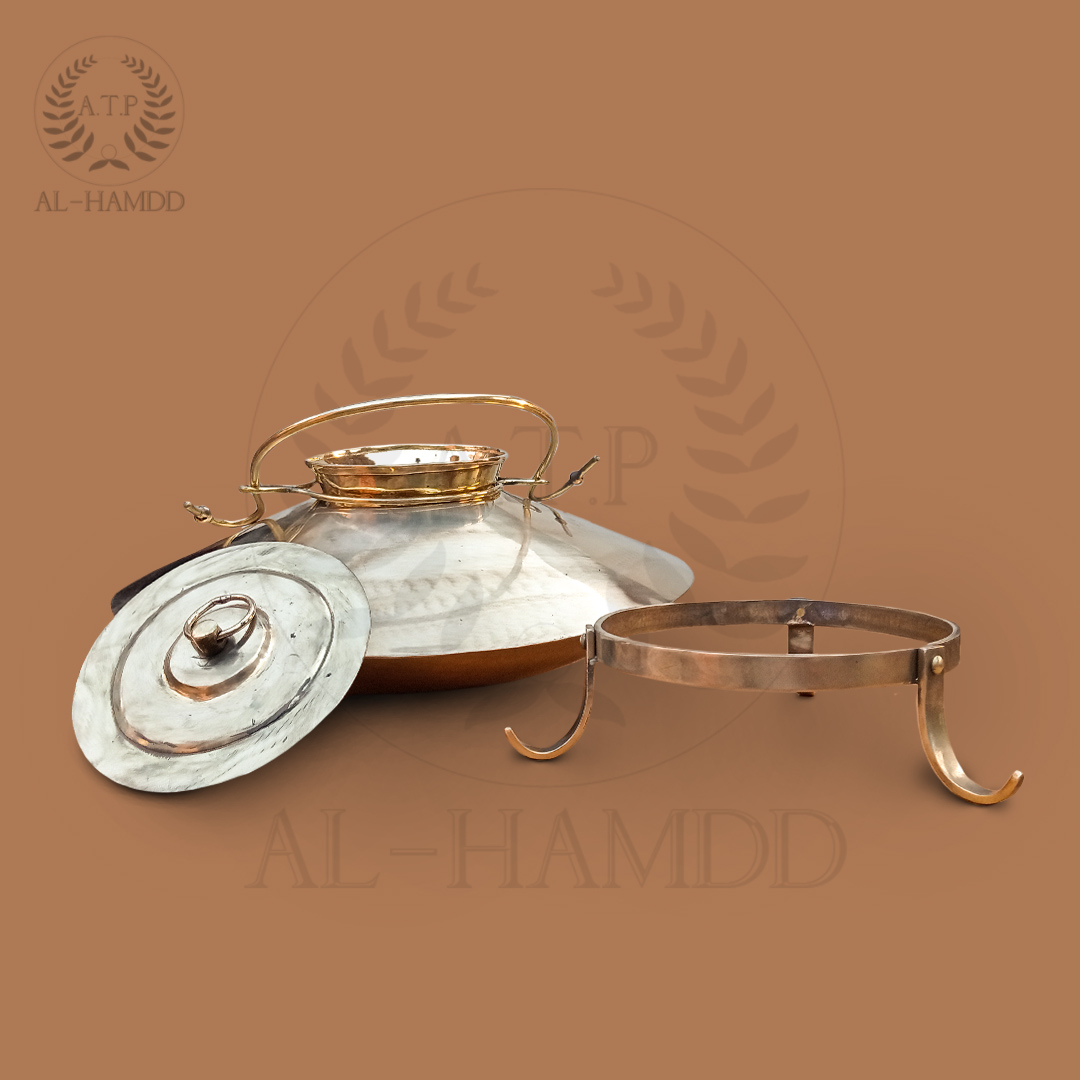
Brass Cooking Pot | Roman Flat Cacabus
Price range: $110.00 through $180.00This product has multiple variants. The options may be chosen on the product pageKey Points –
-Period – Roman Era
– Base Material – 1.2mm sheet metal (Brass/Steel)
– Gross weight – 4 pounds
– Total Height – 13.5cm
– Stomach Diameter – 30cm
– Handle height – 14cm
– Mouth Diameter – 10cm
– Capacity – 1 LDescription –
The brass cooking pot is a timeless kitchen and camping essential, inspired by designs dating back to the Roman era. Favored by soldiers for its durability and practicality, its thoughtfully crafted form features a sturdy handle that allows it to be suspended over an open flame with ease. The gently curved base promotes even heat distribution, ensuring efficient and consistent cooking. Simple yet highly functional, this pot was an affordable staple found in everyday households. Adding to its charm and craftsmanship, the lid is securely attached to the body with a handmade chain of interlinked brass rings. This elegant detail reflects both utility and artisanal tradition.
-
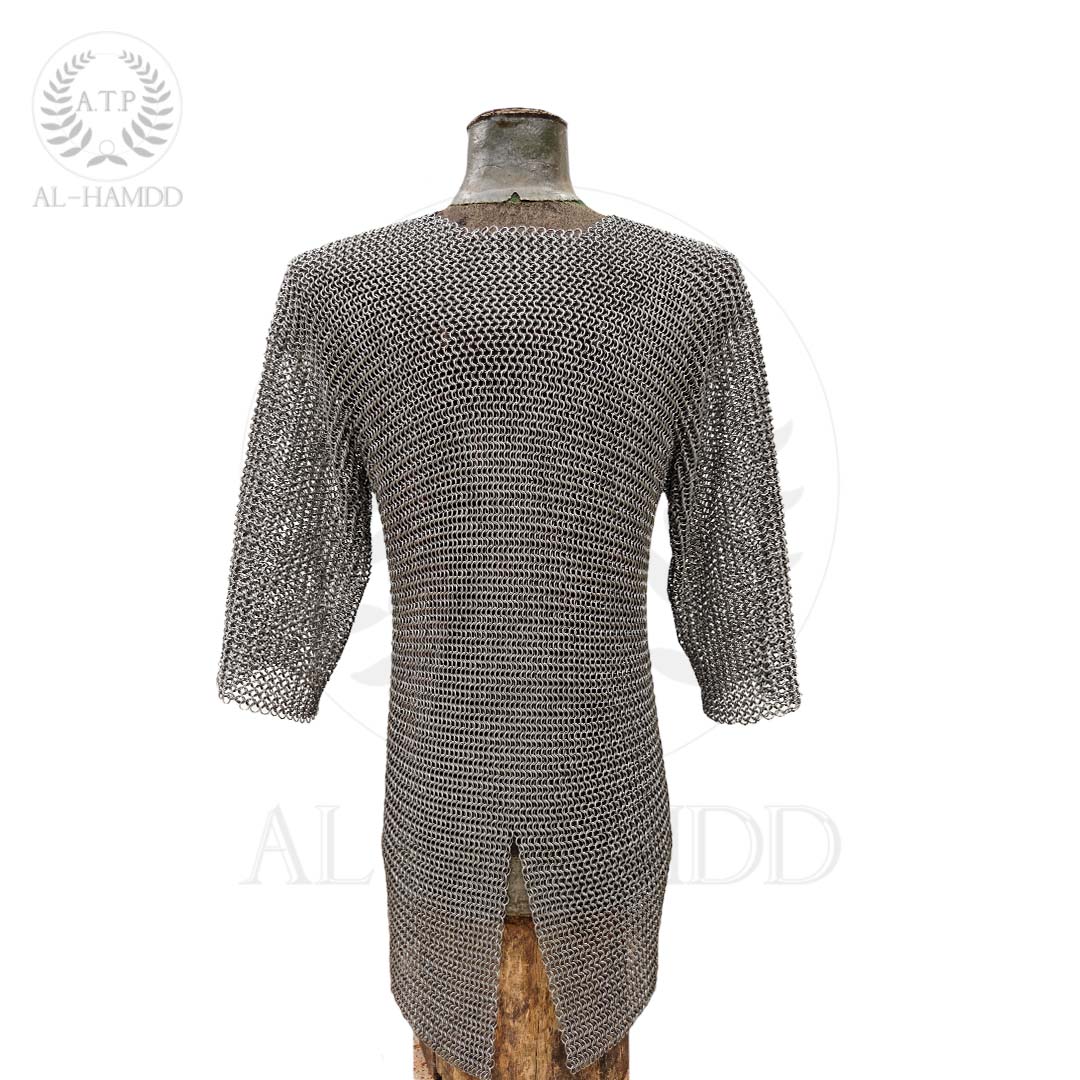
Butted Chainmail Hauberk | 8mm ID | Chainmail Shirt
Price range: $170.00 through $225.00This product has multiple variants. The options may be chosen on the product pageKey Points –
– ‘Made-to-Order’
– Butted rings 8mm ID (Inner Diameter)
– Round-neck long shirt
– Available in all sizesDescription –
Butted Chainmail Hauberk is a long shirt-like armor that is worn as a layer under the chest plate. The chainmail armor adds a layer of protection against sharp blows during combat. A chainmail hauberk covers the upper body and protects the warrior from sword or dagger slashes. This type of chainmail armor is worn under metal chest plates, plate armor, or even scale armor. The construction of chainmail armor is heavy; it must be worn on a thick padded garment for effective weight distribution and comfort. -

Carbatinae | Carpet Shoes | Roman Footwear for Reenactment
$50.00This product has multiple variants. The options may be chosen on the product pageKey Points –
– Handmade
– 3mm thick VT leather
– Flat leather thongs for laces
– Single seam design
– Ergonomic shapeDescription –
Carbatinae | Carpet Shoes are inspired by the footwear fashion of the Roman Empire. The pair does not have a sole as they were purposefully designed to be worn indoors. These shoes are made out of a single piece of leather and are curved along with the shape of the foot. It covers the entire foot and hence fulfills the purpose of keeping the feet warm while giving comfort to the user. These shoes also have leather thongs to tie the shoes per the user’s foot size and shape. These shoes are flat and do not have a separate sole because of their restricted indoor usage. The perforations provide adequate air movement and ventilation of the foot while keeping the feet warm. -

Carbatinae for Women | Reenactment Carpet Shoes
$50.00This product has multiple variants. The options may be chosen on the product pageKey Points –
– Handmade
– 3mm thick VT leather
– Flat leather thongs for laces
– Single seam design
– Ergonomic and stylish shapeDescription –
Carbatinae for Women are inspired by the footwear fashion of the Roman Empire. The pair does not have a sole as they were purposefully designed to be worn indoors. These shoes are made out of a single piece of leather and are curved along with the shape of the foot. It covers the entire foot and hence fulfills the purpose of keeping the feet warm while giving comfort to the user. These shoes also have leather thongs to tie the shoes per the user’s foot size and shape. These shoes are flat and do not have a separate sole because of their restricted indoor usage. The perforations provide adequate air movement and ventilation of the foot while keeping the feet warm. -
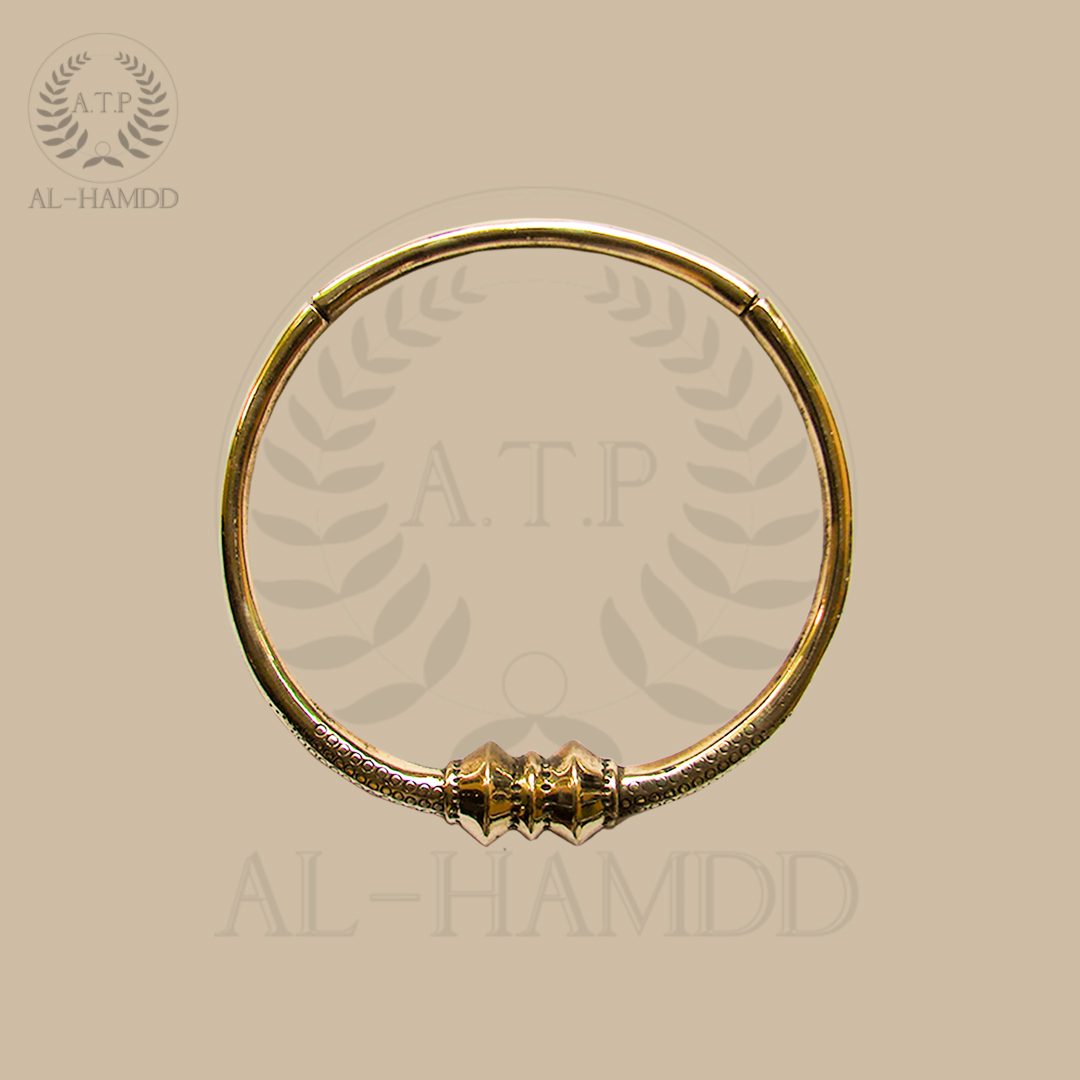
Celtic Torc I
$25.00Celtic Torc I
The Celtic Torc I is one of the many designs that were used during the high to mid-Celtic era. The people of the land wore strong and bold jewelry to show their power and strength. The pagan culture extensively used animal figures in their jewelry as a symbol of life and death. In this particular design, there are two beads right in the center of the torc while the entire torc has an engraved design.
-

Chalcidian Type Greek Helmet | Greek Reenactment
Price range: $175.00 through $250.00This product has multiple variants. The options may be chosen on the product pageKey Points –
– Constructed in 1.2mm sheet metal
– Bowl size 19 x 23 cm
– Cheek guards are attached using rivets
– Painted black on the insideDescription –
The Chalcidian Type Greek Helmet is believed to be inspired by the Corinthian helmet and was originally found on the pottery found in the province of Chalcis, island of Euboea. The helmet is believed to have been used during the 5th and 4th centuries BC and was majorly used by the Hellenic warriors. The original artifacts of the helmet show that it was made in bronze. The helmet was found with two methods of attaching the cheek guards, in one they were fixed while in the other they were detachable. -
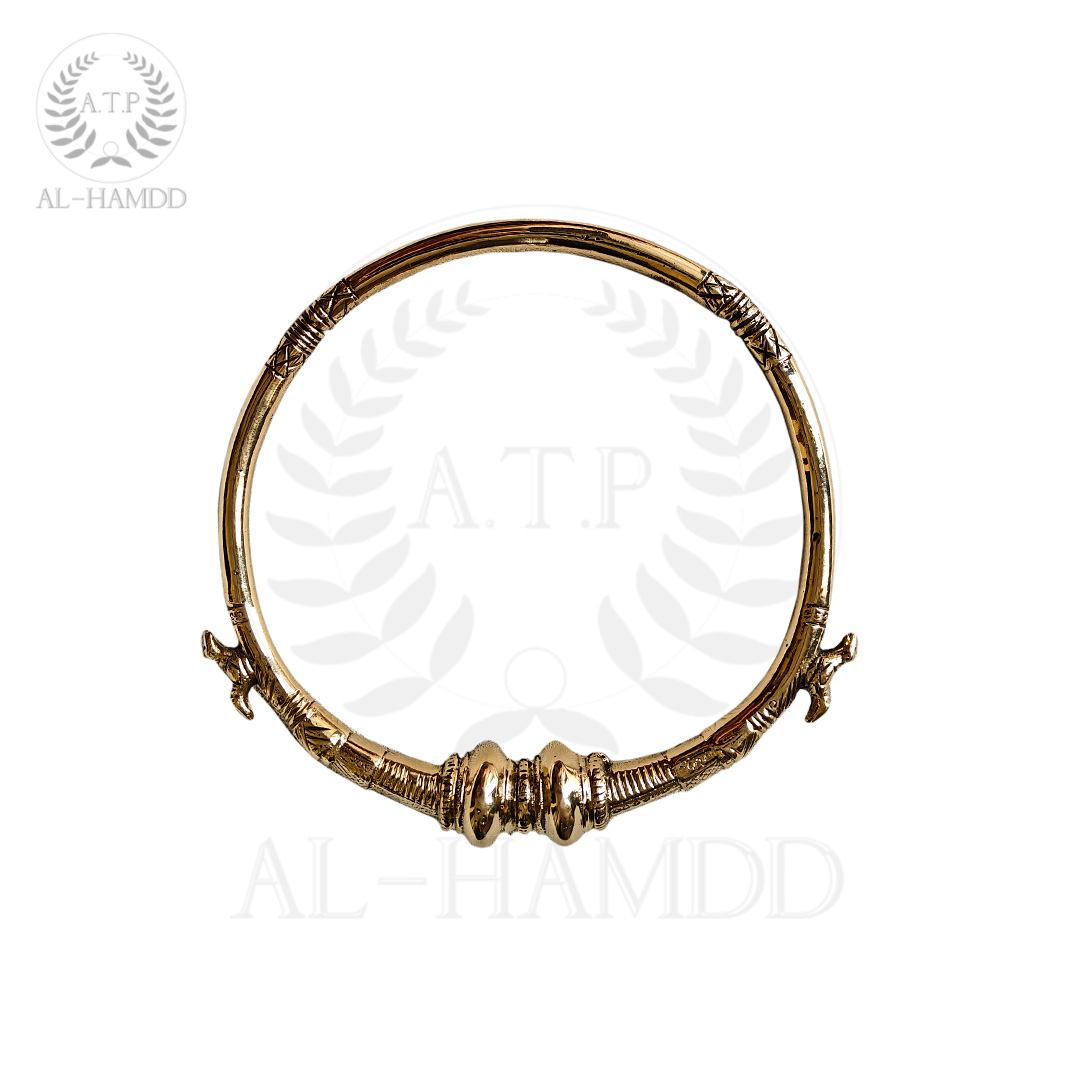
Closed Buffer Torc | Roman Reenactment Jewellery
Price range: $25.00 through $27.00This product has multiple variants. The options may be chosen on the product pageKey points –
Era – 4th century AD
Weight – 1.1 pounds
Inner Diameter- 15 cm
Outer Diameter- 16 cm
Gross weight- 1 poundBuffer Torcs were worn as neck jewellery in Celtic and Roman cultures. The closed buffer torc features an interesting design, with two parts: the front and rear. The two parts are attached using a tongue-and-groove joint. The torc has a unique design with a stippled texture along its length. The torc has two bird-like shapes on either side of the buffers.