-
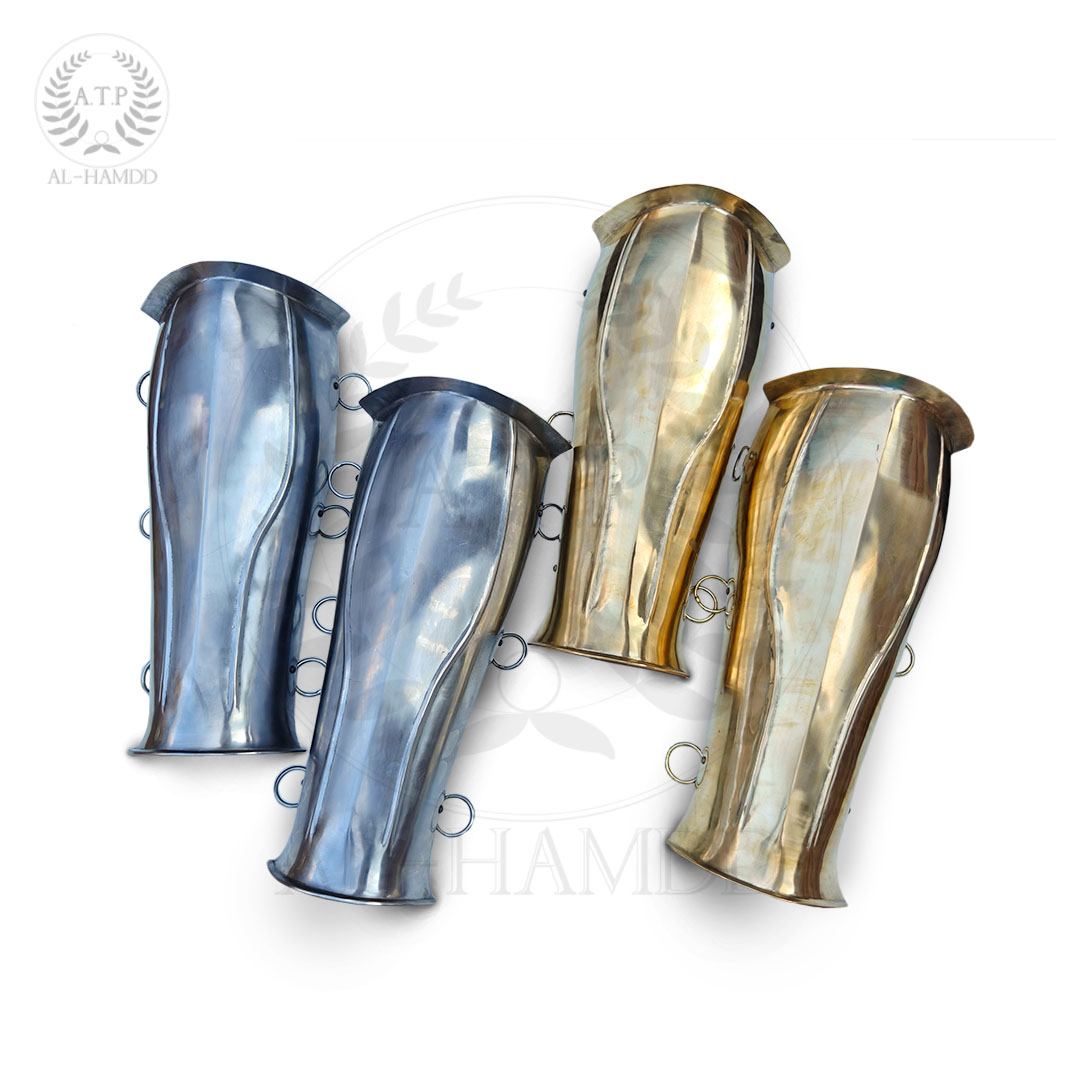
II Century Roman Greaves | Late Roman Greaves
Price range: $100.00 through $150.00This product has multiple variants. The options may be chosen on the product pageKey Points –
– Length – 40cm
– Calf width (maximum) –
– Ankle width (minimum) –
– Hand-embossed
– 25mm inner diameter rings on the pairDescription –
II Century Roman Greaves are believed to have been used during the II and the III centuries AD. They are short greaves and do not have a knee plate. They were probably worn by foot soldiers of the Roman army/cavalry. The design and shape of the greeves were kept simple and functional; they provide better mobility but lesser protection against impact. Some artefacts of these greaves also show the use of chain links for fastening, but this model comes with flat leather thongs. -
Sale!
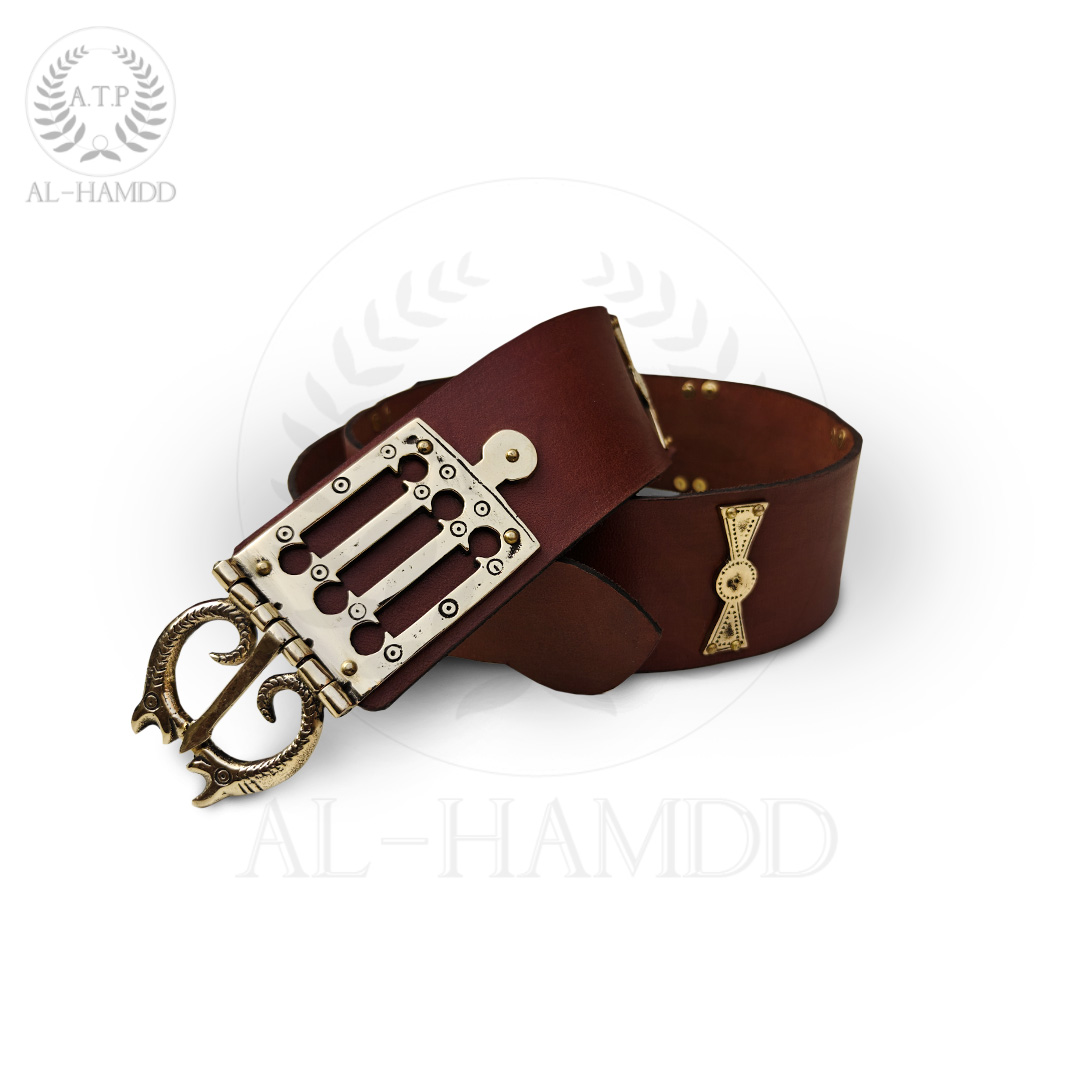
IV Century Roman Belt | Reenactment Balteus
Original price was: $32.00.$26.00Current price is: $26.00.This product has multiple variants. The options may be chosen on the product pageKey Points –
– Gross length – 120cm
– Width – 5.5cm
– Gross weight – 0.75 Pounds
– Thickness of brass stiffeners – 1.5mm / 16g
– Leather thickness – 3mmDescription –
The IV Century Roman Belt is an accessory of the Roman military attire and an important part of the equipment for the sword. The belt comes with eight stiffeners to keep it sturdy and capable of handling the weight of the sword. The belt buckle is designed with serpentine heads and an arrow-shaped pin. -
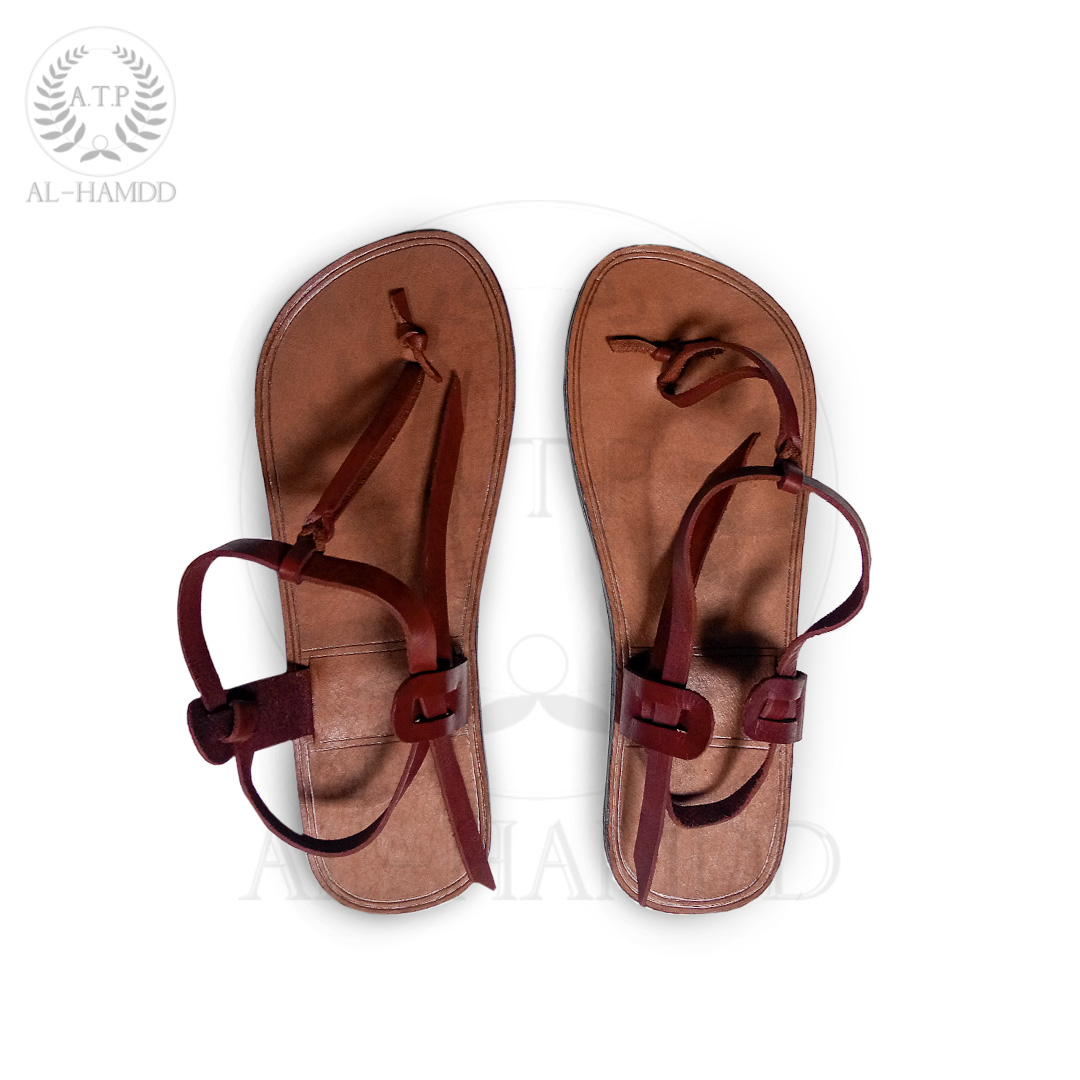
IV Century Sandals | Inspired by Louvre Museum
$50.00This product has multiple variants. The options may be chosen on the product pageKey Points –
– 2mm thick vegetable-tanned leather upper.
– 4mm thick heavy-duty leather sole.
– Leather Laces.
– Hand Stitched.
– Available in three color options. Custom colors are also available on special request.Description –
The IV Century Sandals are a pair of reenactment leather sandals from the Roman era and inspired by the artefact in the Louvre Museum. The pair of sandals were used by the local folk of the Roman Empire. -

Jarak helmet | Berkasovo Type Roman Helmet
$350.00The Jarak helmet belongs to the family of Berkasovo-type helmets due to its similarities in the overall construction details and the decorations. As per relevant scholarly references, the helmet was found in a clay pot. A farmer found the clay pot while plowing his lands in the province of Srem, Serbia. The helmet was later purchased by the Vojvodjanski Museum, Novi sad, Serbia. The Jarak helmet is believed to have been used during the 4th century AD by one of the officers of the Licinius Army. The actual ownership of the helmet is uncertain as the place of excavation was a hotbed of conflicts in history. It is categorized as a Roman helmet due to its similarities to the Berkosovo-type helmets. The original find of the helmet has silver rivets and traces of silver gilding on the helmet bowl. Interestingly, there are no traces of any precious stones attached to the helmet.
-

Knife-Spoon combination cutlery | Antique cutlery | Set of 6
Price range: $50.00 through $90.00This product has multiple variants. The options may be chosen on the product pageKey Points –
– Made by the Sand-Casting method
– Assembled by hand
– Shiny polish
– Length is ergonomic
– Weight – 0.12 PoundsDescription –
A replica of the Knife-Spoon combination crafted in sand-cast pure brass. The original artifact was found in Vindonissa, Switzerland, and is believed to have been used in the early Roman period. This is an exquisite piece of cutlery made of pure brass and manufactured by using the sand-casting technique. A motif shaped like a lion’s head, symbolic in Roman culture, is placed at the center of the item. On one side of the item is a spoon, and on the other side is a knife. -

Koblenz Helmet
$250.00Roman Koblenz Helmet
Koblenz helmet is a ridged helmet used in the late Roman era, i.e. I century AD. This helmet shares some features with the helmets found in Burgh Castle like Berkosovo and Jarak Helmets. Unlike Berkosovo and Jarak helmets, this is a simpler design with less intricate details. Ear guards are made with an embossed design and are attached with leather belts similar to its ‘original’ found in Koblenz, Germany. This replica is made in two layers (iron and brass), brass sheet has an embossed design.
-
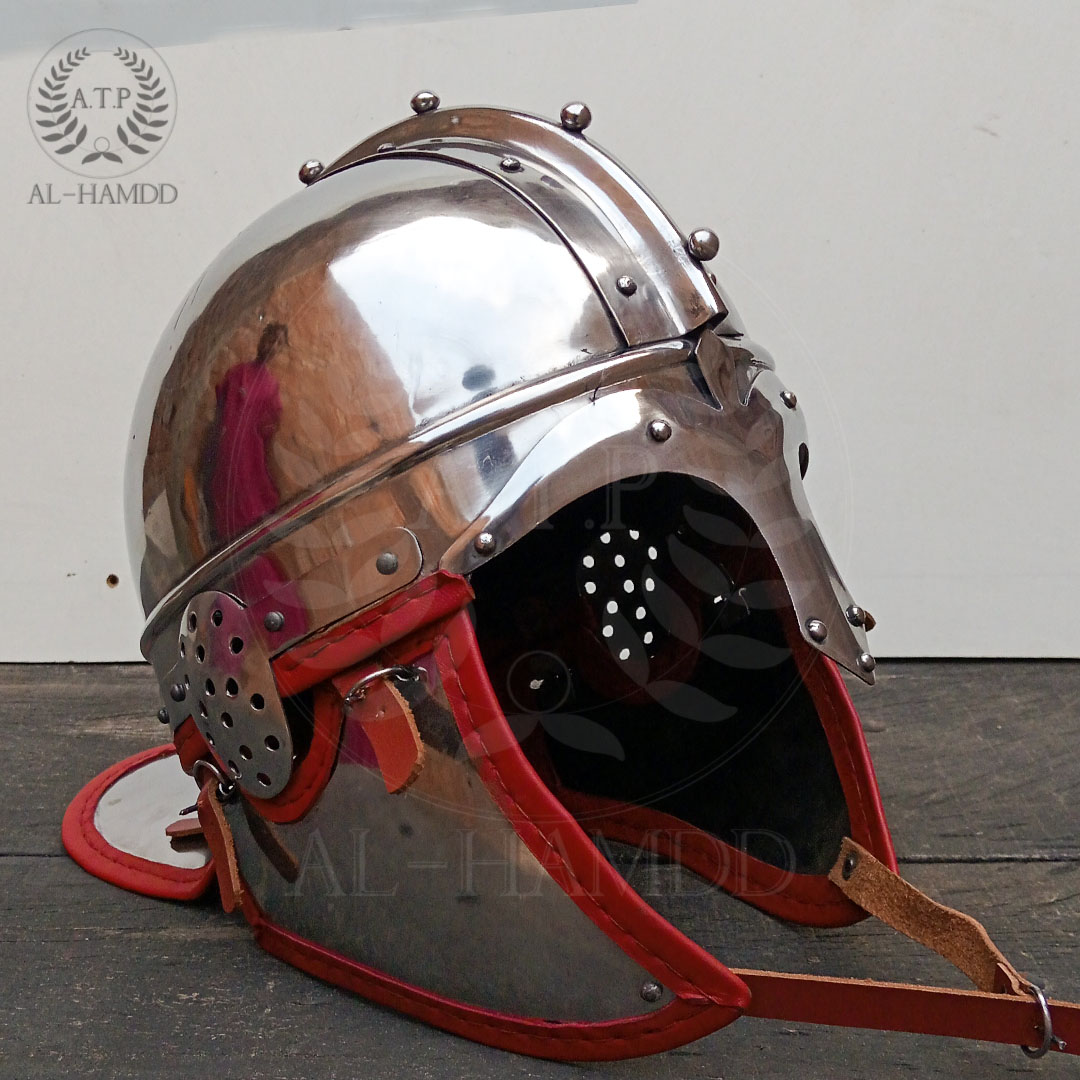
Koblenz type Steel Helmet | Roman reenactment helmet
$150.00Koblenz helmet is a ridged helmet used in the late Roman era, i.e. I century AD. This helmet shares some features with the helmets found in Burgh Castle like Berkosovo and Jarak Helmets. Unlike Berkosovo and Jarak helmets, this is a simpler design with less intricate details. Ear guards are made with an embossed design and are attached with leather belts similar to its ‘original’ found in Koblenz, Germany. This replica is made in two layers (iron and brass), the brass sheet has an embossed design.
-
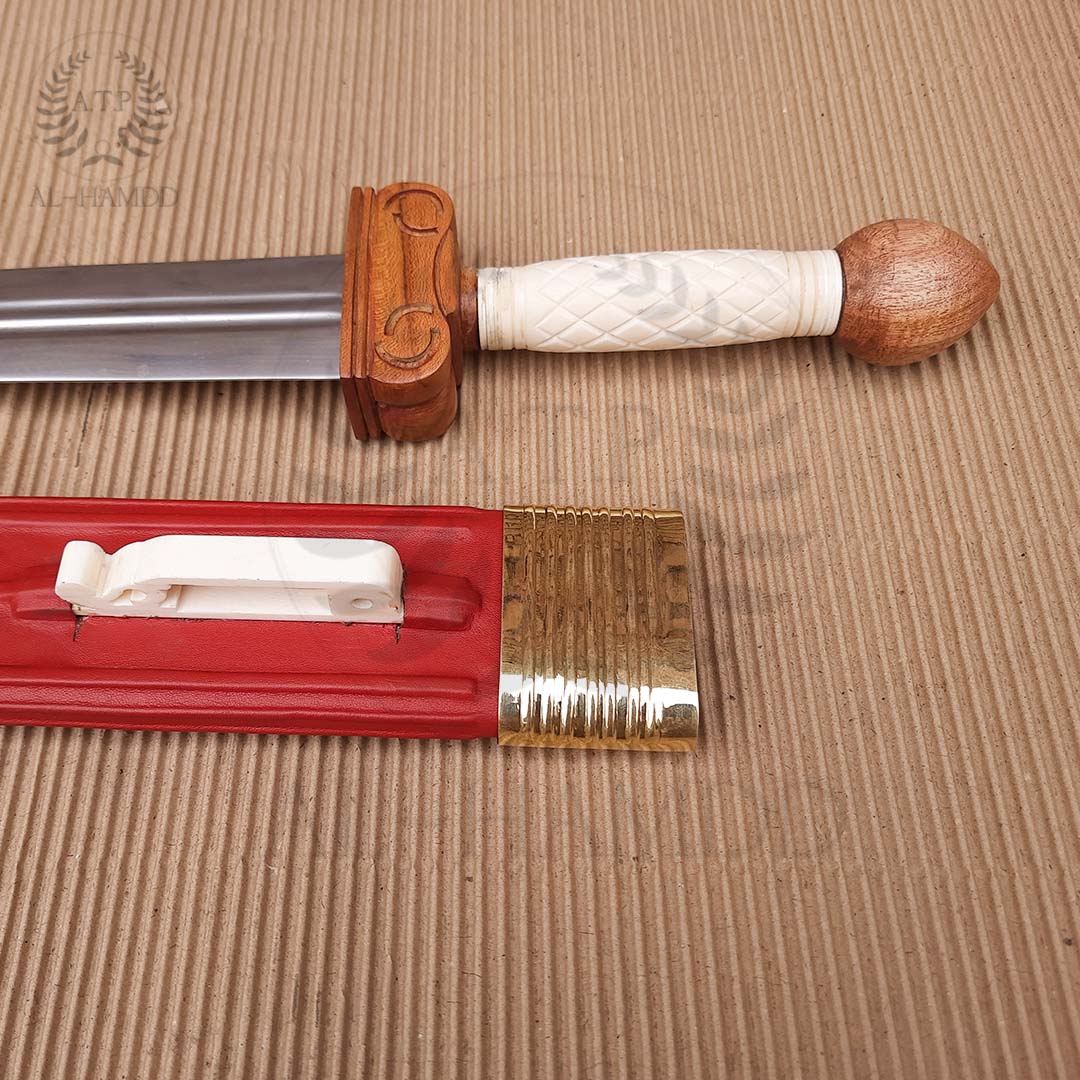
Late Roman Spatha
$150.00The Late Roman Spatha is believed to belong to the late third century or early fourth century. Spatha is a double-edged long sword that is used for long-range combat weapons, generally used with both hands. It was used beyond that period as well but it has its roots in this time range only. Our replica has a composite hilt, the cross-guard, and the pommel are made of wood while the handle/grip is made of bone.
-

Macedonian Helmet | Thracian-type reenactment helmet
Price range: $220.00 through $300.00This product has multiple variants. The options may be chosen on the product pageKey Points –
– Make of 1.2mm metal sheet
– Head Size – 19x23cm
– The helmet is painted in black color on the insideDescription –
The Macedonian helmet is inspired by the Thracian Helmets from the Greek era. The original artifacts found in the Copais River only had a bronze head with an inscription on the front rim. The shape of the front cap and the neck protector is quite similar to the Phyrigian or Thracian-type helmets but the bowl shape is different. The helmet seems to have been designed without a crest and therefore the bowl is shaped with a prominent ridge. The artifact does not have any cheek guards attached to the helmet. The cheek guards on our replica are inspired by the Thracian-type helmets from the Greek period. -

Military Campagi | Roman Reenactment Shoes | Deurne
Price range: $65.00 through $70.00This product has multiple variants. The options may be chosen on the product pageKey Points –
– 2mm thick vegetable-tanned leather upper.
– 4mm thick heavy-duty leather sole.
– Leather Laces.
– Hand Stitched.
– Available in three color options. Custom colors are also available on special request.Description –
The Military Campagii is a pair of reenactment leather shoes inspired by the historical find from Deurne, NL. It likely belongs to the 4th century AD. The design of the shoes is inspired by the museum replica. The design of the shoes can have slight variations from the original find as the remains were not in good condition. -

Montefortino-type helmet
$225.00The Montefortino-type helmet is considered to be an Italian/Etruscan military helmet. It is one of the many Montefortino-type helmets found in history. The scholarly works claim that there are nearly 400 different types of Montefortino helmets that are dated from different eras. It is believed that the helmet was developed in the Greek period and the design was carried forward to the Roman era. It got its name from an excavation site in Italy i.e. Montefortino; which is also a Celtic burial site.
-
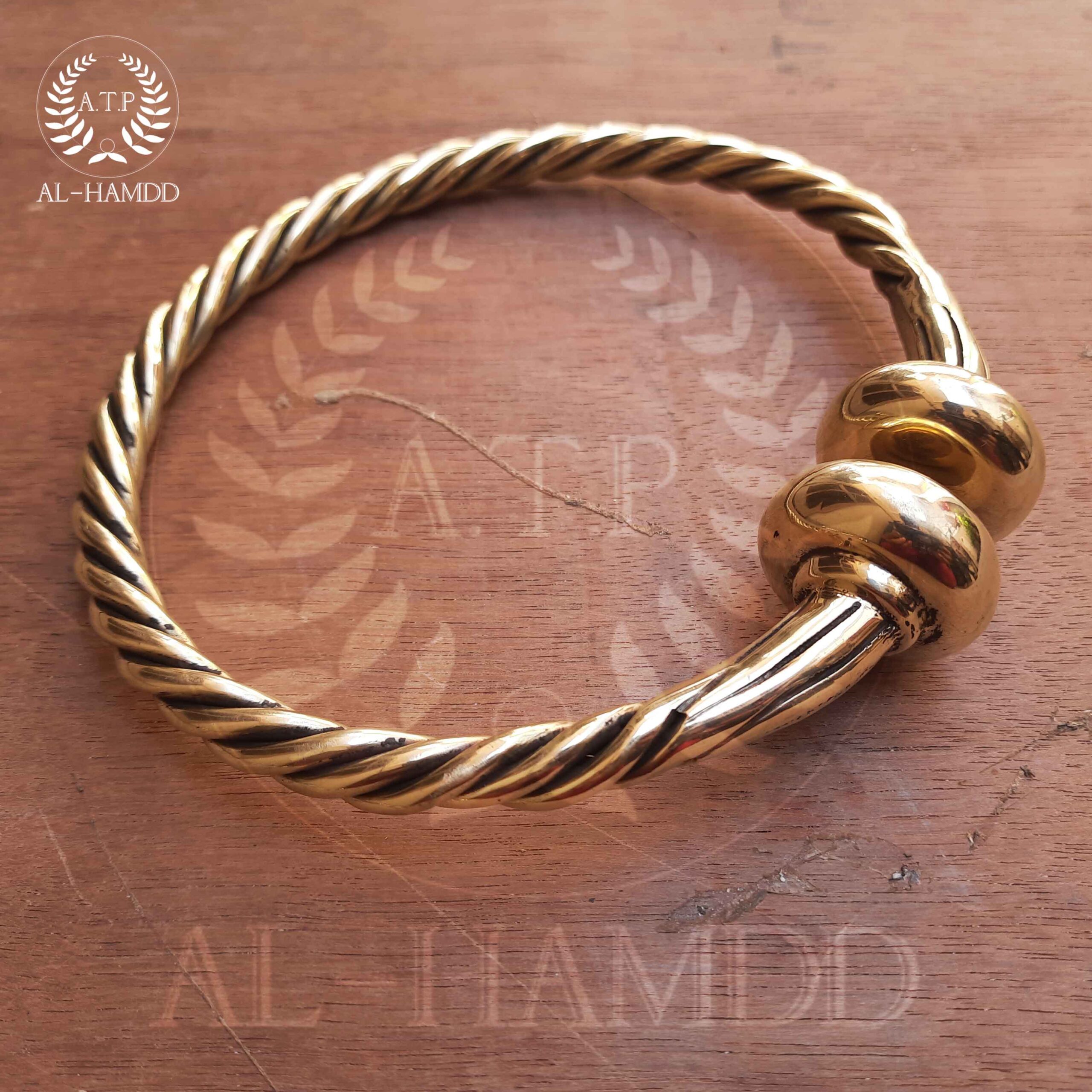
Neck Ring Brass | Iron age replica | Reenactment
Price range: $26.00 through $39.00This product has multiple variants. The options may be chosen on the product pageKey Points –
– Hand-made
– Available in Brass and Copper
– Suitable for Roman era reenactorsDescription –
The Neck Ring was a part of the lifestyle of Celtic people, and it carried forward to the Romans. They were predominantly used by the Celts, but historical evidences show that they were used in the Iron Age as well. There were many designs of such neck rings, ranging from simpler to intricately detailed knobs. In combination to a neck piece, people wore these on their arms (biceps) as well as wrists. -

Norman Nasal Helmet | Medieval Reenactment Helmet
Price range: $110.00 through $165.00This product has multiple variants. The options may be chosen on the product pageKey Points –
– Steel two-part bowl with the nasal and rim attached using steel rivets.
– Foam and Goat-leather liner on the inside.
– Vegetable-tanned chin strap with D-buckle.
– Fits a head circumference of 56-58cm.Description –
The Norman Nasal Helmet was used by the army men of William the Conqueror during the Battle of Hastings in 1066 against England. The Normans were descendants of Vikings who settled in the North of France. They were fierce warriors and great archers, mounted on horses. The shape of the helmet was intentionally designed to provide a clear and panoramic view of the battlefield. The warriors wore these helmets on a woolen or felt cap to provide comfortable padding on the head. The shape of the skull, ridged in the center, provided adequate protection against the blows of arrows and maces. The helmets were practical but provided less protection against attacks. The charm of this helmet faded when other provinces of Europe began developing closed helmets for better protection. -
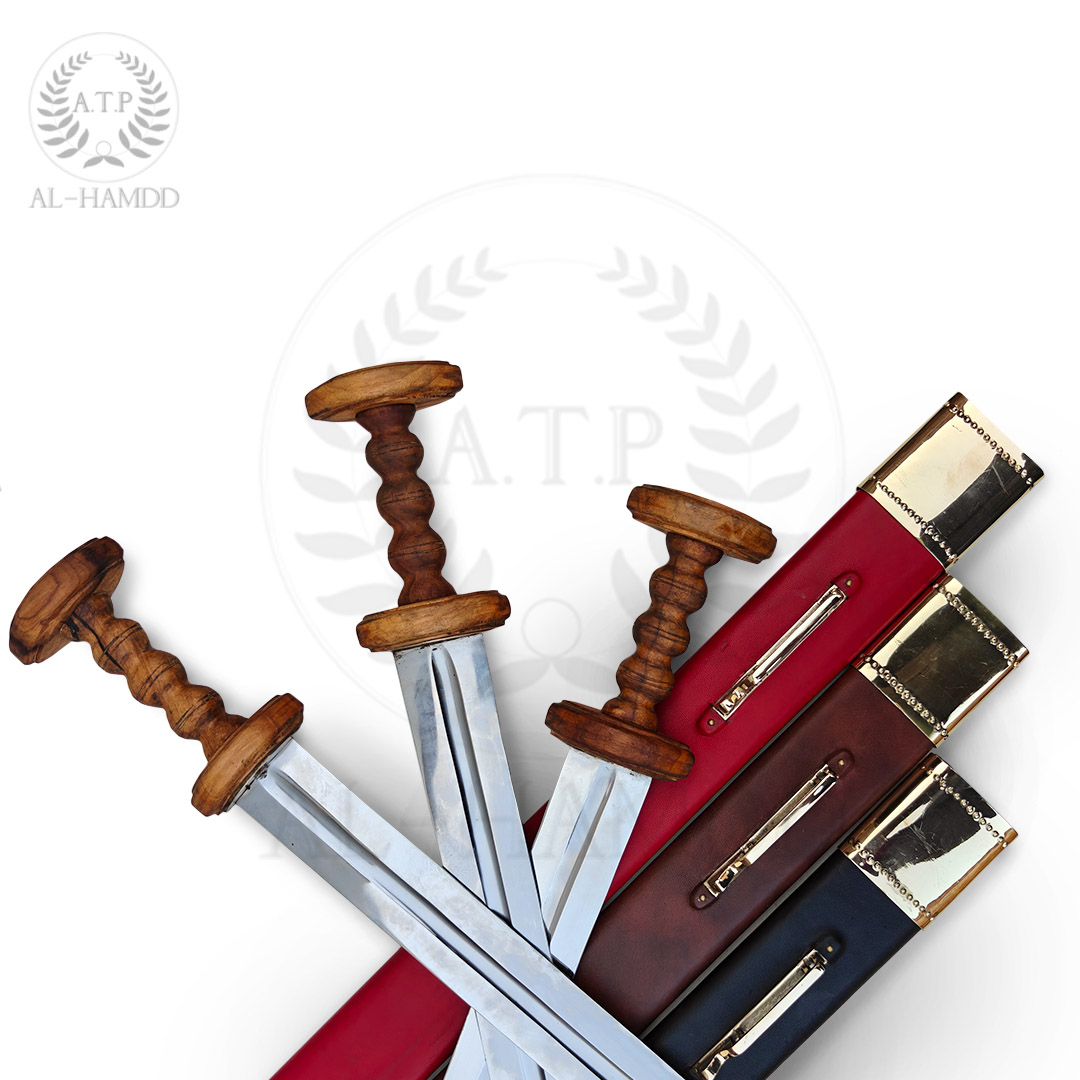
Nydam Roman Sword | Late Roman Spatha
$150.00This product has multiple variants. The options may be chosen on the product pageKey Points –
– Hand-Made
– Edges are blunt, and the tip is rounded. Suitable for reenactment and decor
– Double-edged long sword
– 250mm x 10mm long single fuller
– Wooden hilt
– Wooden scabbard with brass fittingsDescription –
The Nydam Roman Sword is believed to belong to the late Roman period between the 4th and the 5th centuries. The excavation site for its find was Nydam Bog, Denmark. There were no clear remains of the hilt and the scabbard; therefore, it is inspired by other close references of the same period. The spatha is a double-edged long sword that is used for long-range combat. It was used with both hands for stability and precise action. -

Officer’s Muscle Cuirass | Roman Armour | Brass
$360.00The Officer’s Muscle Cuirass, also known as the Roman Musculata. It is an anatomical piece of armour designed for Roman Reenactors. A cuirass has been a part of the armour for a long time, it was used by Greek Hoplites and then was used by Roman army officers as well. There are a lot of examples of decorated cuirasses from the Roman Empire; the main decorative element being the central figurine. In our replica, we have used a Medusa figurine which was one of the three gorgons from the Greek Mythology. This is another piece of evidence that shows that the basic design of cuirasses was trickled down from the Greek era to the Roman era. It was the Greeks that brought forward the idea of anatomical armour for hoplites, producing muscular armour for their hoplites.
-
Sale!

Phyrigian Style Greek Helmet | Greek Reenactor helmet
Price range: $225.00 through $300.00This product has multiple variants. The options may be chosen on the product pageKey Points –
– Make of 1.2mm metal sheet
– Head Size – 19x23cm
– Hand-embossed cheek guards
– Hand-etched Moustache
– Welded feather tubesDescription –
Phyrigian Style Greek Helmet is also known as the Thracian helmet. The historical artifact of the helmet was found in a European region called Thrace, in ancient Greece. The shape of the helmet bowl looks like the Phyrygian helmet from Phyrygia, Anatolia. Therefore, it is also related to the Phyrigian type helmets. This helmet is believed to have been used in the late VI century BC. The shape of this helmet is like a shepherd’s cap. Some also argue that its shape has a palmette design with its top as a bird’s neck. The helmet also has side tubes to hold feathers and other decorative features.