-
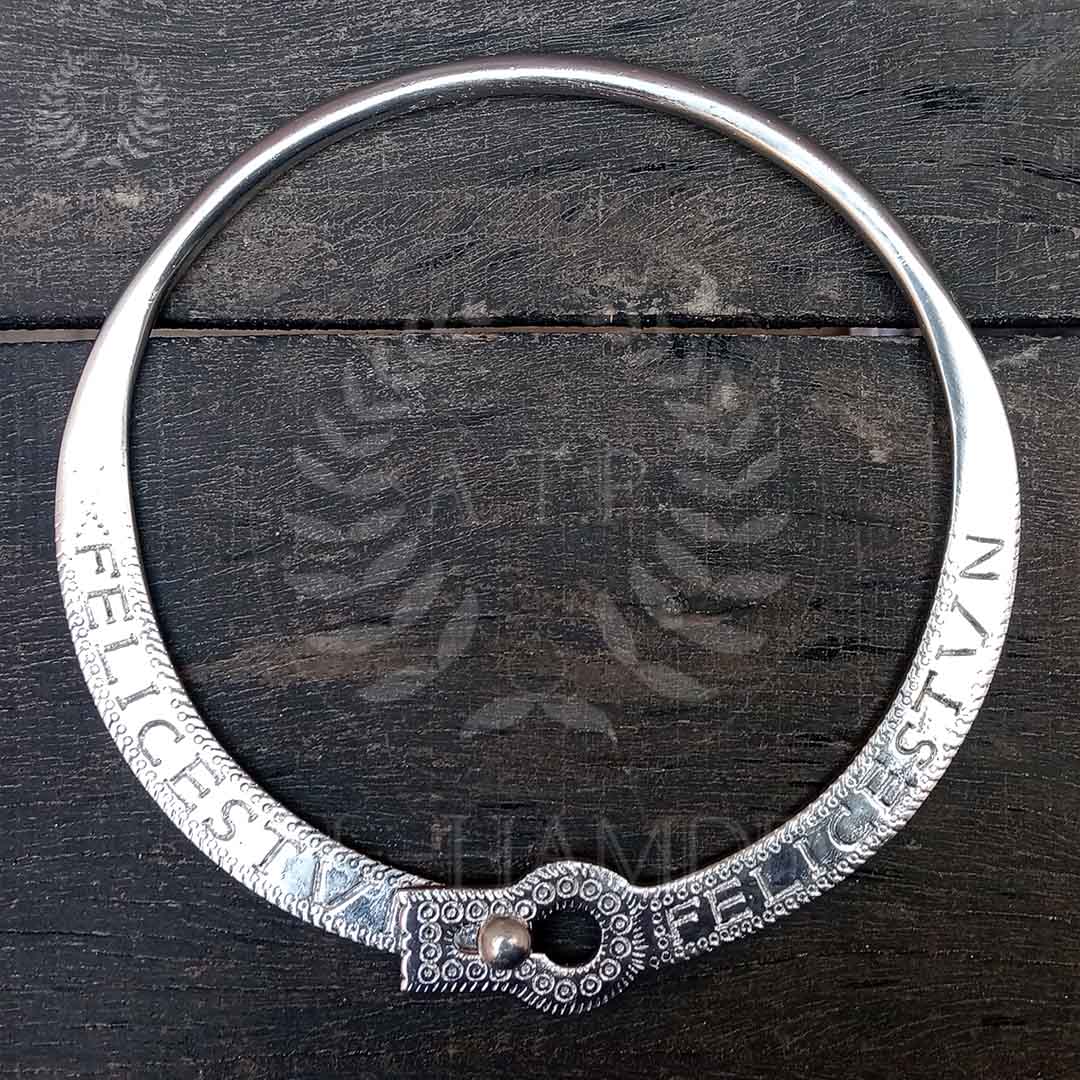
Roman Neck Ring | Reenactment Jewellery
Price range: $25.00 through $30.00This product has multiple variants. The options may be chosen on the product pageA replica of the Roman neck ring with an inscription from the Military group of the Roman period. The neck ring shows a mushroom-shaped rivet and a cut-out hole of identical shape at the left end. The rims of the obverse are lined with short notches and small punched circles as well as cube eyes in the area of the thickening. There is a stamped inscription ‘FELICES TVN’ on the obverse. Torcs, originally the neck rings of Celtic warriors, are documented as military awards in the Roman army since Republican times. They were usually worn over the breastplate armor. Gold and silver neck rings are also mentioned as an accouterment of the Draconiarii, the bearers of the Draco standard. The rings were used as a cohort field sign until late antiquity.
The inscription FELICES TVN probably refers to the auxiliary unit of the Sagittarii Tungri mentioned in the Notitia Dignitatum. It is, therefore, the only military insignia of a standard bearer known historically.
* This description was provided to us by an Italian archaeologist Michele Angiulli.
-
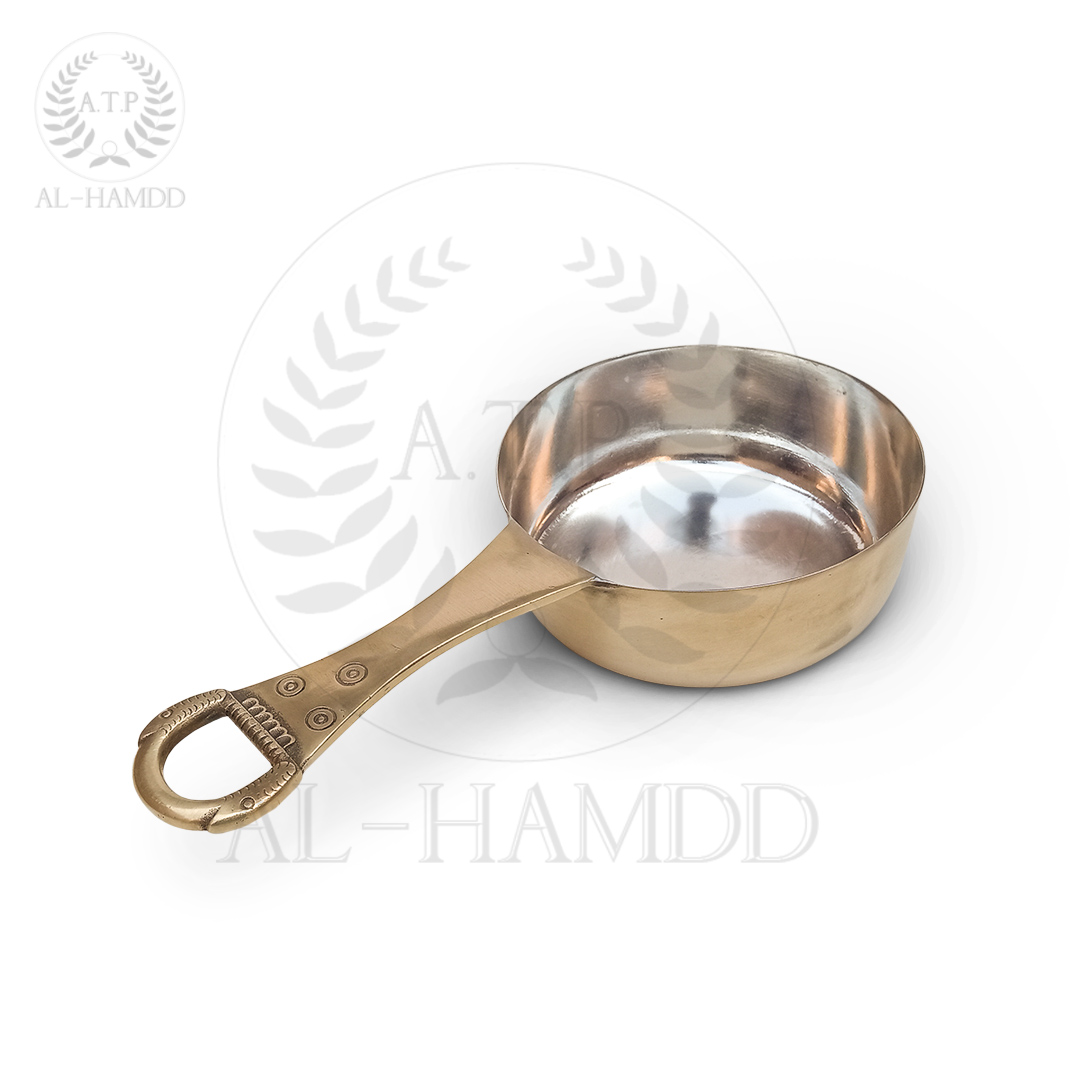
Roman Patera for camping | Brass saucepan
$60.00Roman patera is a saucepan believed to have been used by the Roman legions during battleground camps. It was an essential piece of equipment for the Roman army while they were on long marches during expeditions. The infantrymen carried such cooking essentials along with cutlery and other types of utensils of use. The Patera or other types of saucepans were also a part of households for cooking small portions of food for the family. This particular saucepan is believed to be used mainly for cooking soups. The original patera was found in the remains, but the base was missing, and the handle had some varying designs as per scholars. The bowl has a lip (a slight bent) along the rim to help pour liquids into cups.
* The engraved design on the handle is not exactly the same as the historical artifact, it is an inspiration from various patterns and shapes. -
-

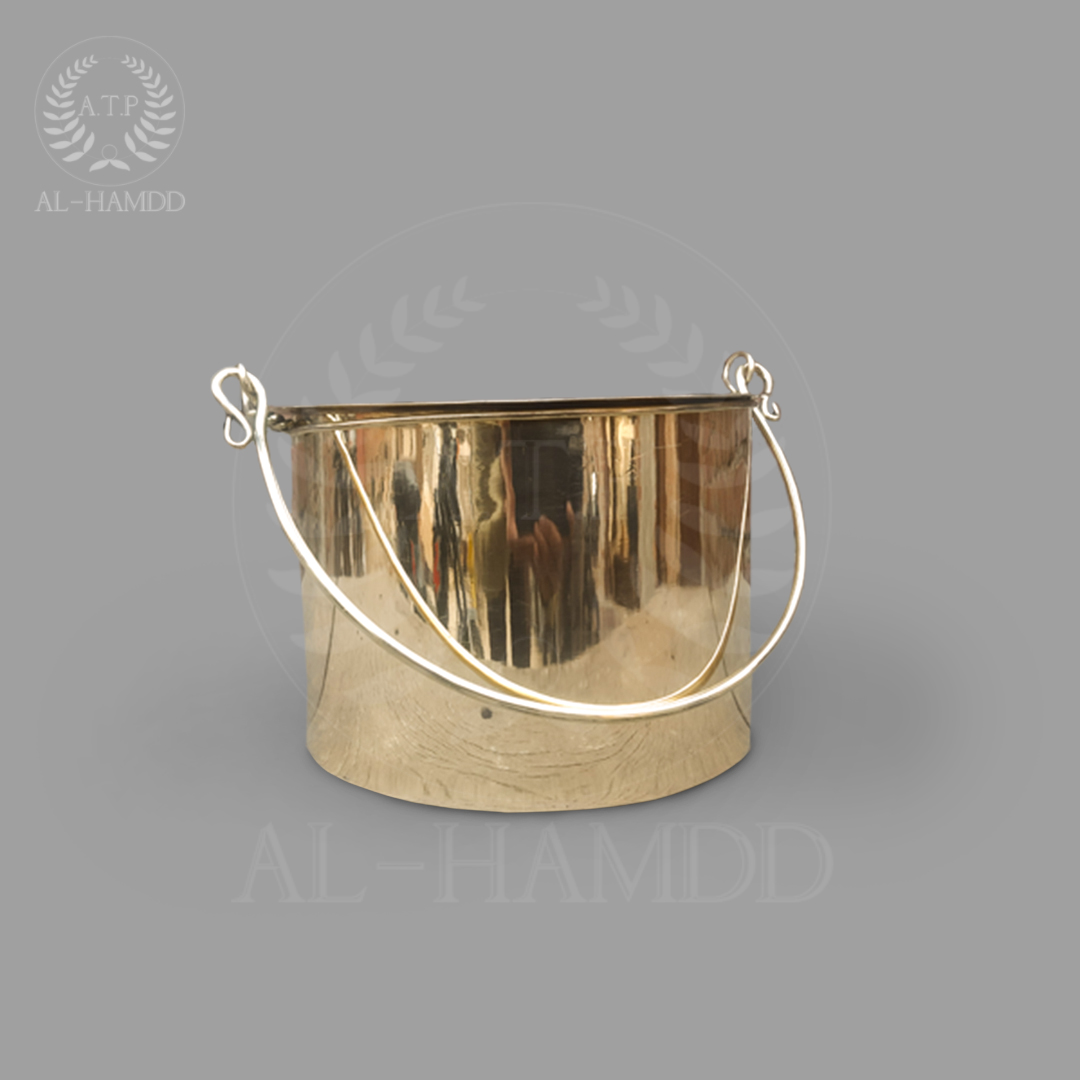
Scale Armor | Squamata | Small Arched Scales
Price range: $250.00 through $610.00This product has multiple variants. The options may be chosen on the product pageKey Points –
– ‘Made-to-Order’
– 0.5mm thickness scales
– Scale Size – 16 x 25 mm
– Made in two pieces; Rings and thongs are provided for fastening
– Heavy Duty canvas fabric on the inside
– 1mm thick goat leather edging**Please write to us to confirm your choice of leather for the edging of the armor. Color Options –
– Black
– Brown
– Tan
– Red
– IndigoDescription –
The Scale Armor, also known as the Lorica Squamata Armor, was used by the Roman army men for a long time. Predominantly, the armor is known to have been widely used between the I & II centuries. There are no archaeological remains of any complete Squamata armor, but scholars present the idea that they were first introduced during the Dracian wars. Such a type of armor was interchangeably used between a Lorica Segmentata (plate armor) and a Lorica Hamata (maille armor). -
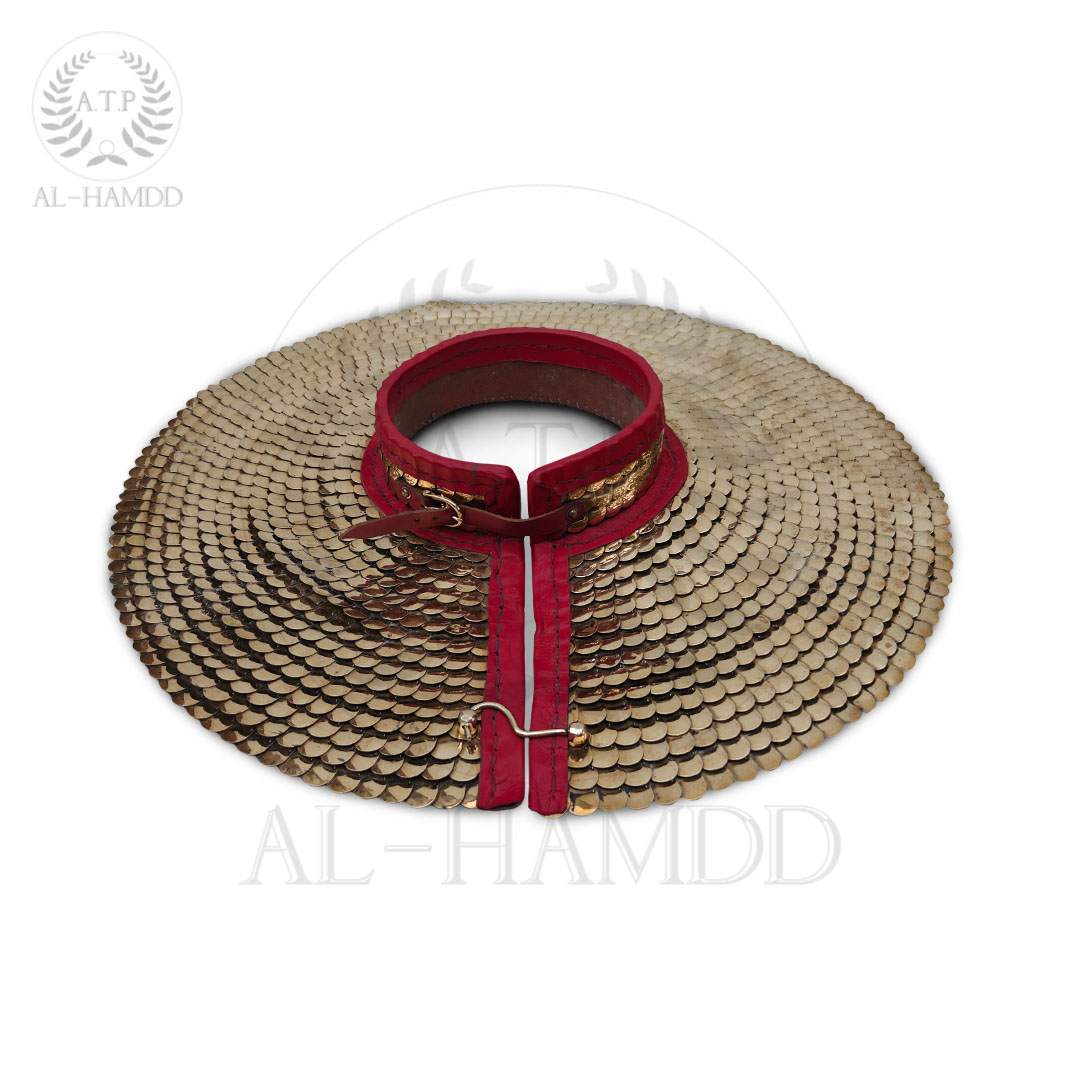
Scale Gorget | Reenactment Gorget | Armor
Price range: $145.00 through $165.00This product has multiple variants. The options may be chosen on the product pageKey Points –
– Gross Weight – 1.5 to 1.9 kg
– Diameter – 57cm
– Neck Diameter – 18cm
– Scale thickness – 0.5mm
– Brass wire scale connections and cotton thread stitching
– Goat leather edging around the neckThe scale gorget is a suitable piece of armor for Roman-era reenactors. The Squamata armor was evidently used by the Roman officers. The squamata was an expensive piece of armor, and therefore, only cavalrymen have been seen wearing them. It can be worn on a cuirass or a chainmail armor to provide additional protection to the soldier.
-
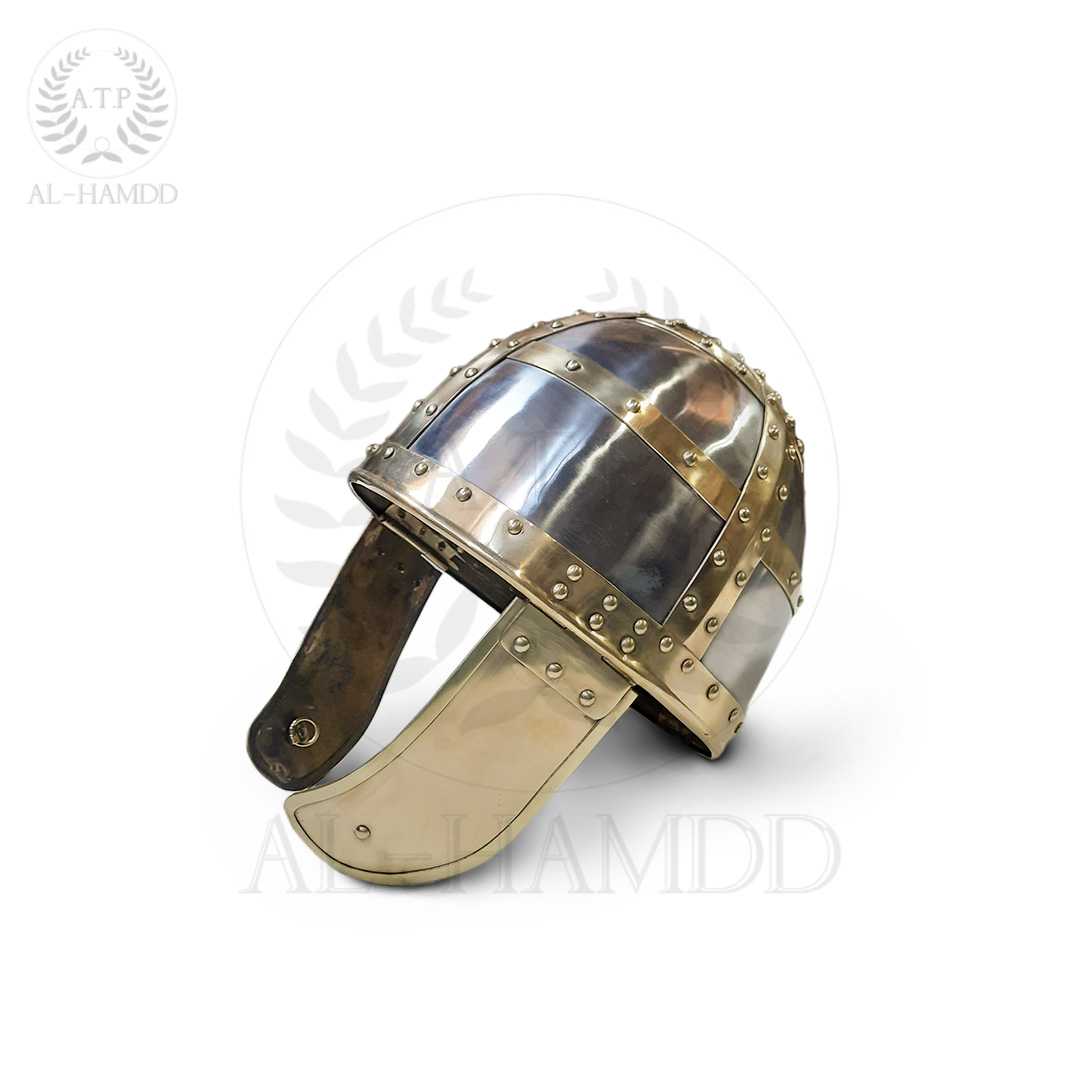
Spangenhelm-type Roxolani Helmet
$150.00Spangenhelm-type Roxolani Helmet
The Spangenhelm-type Roxolani Helmet is categorized as a cavalry helmet. As the name suggests, it is similar to the Spangenhelm from the Roman era. The design of the brass decoration strips is different from the original Spangenhelm but follows the same style. The cheek guards are simple and have a protective edging all around; it gives the cheek guards a character of its own. The helmet is also categorized for use in the cavalry units, to give extra head protection to the user.
-
Sale!

Weisenau Mainz helmet | Roman Era Reenactment
Original price was: $165.00.$140.00Current price is: $140.00.Key Points –
– 1.2mm steel, tinned on the outside and painted black on the inside
– Brass sockets for hardened red enamel
– Hand-engraved design
– Brass clip and brass rings for holding a crestDescription –
Weisenau Mainz helmet is a Roman army Imperial helmet. The original artifact of the helmet is showcased in the Schaffhausen Museum, Switzerland. A copy of the same helmet is also showcased in the Romano-Germanic Central Museum (RGZM), Mainz. The helmet is similar to other Imperial and Gallic helmet as mentioned in the Axel Guttman collection. The original helmet is believed to be constructed of bronze metal with a tinned finish. The embossed lines at the back of the helmet and the top of the bowl are a feature on nearly all the imperial helmets. The neck guard of this particular helmet is smaller and more decorated as compared to the others. The cheek guards are also similar; the only difference is the use of brass sockets for enamel decoration. -

Weisenau-Guttman Helmet | Legionary replica helmet
$150.00The Weisenau helmet is considered to have been used during the late Roman period. The design and appearance of the helmet show that it belongs to the Guttman collection. The helmet is made of brass and then tinned for finishing. It is also available in heavily tinned iron. The ear flaps are engraved with a decorative figure.