-

Embossed Verona greaves | Legionary Quintus greaves
$150.00Key Points –
Hand-made and Hand-Embossed
Delivery in 1-2 weeks
Weight per pair – 5.75 Pounds
Overall Length – 49cm
Fits a calf circumference of 45-50cm
Padded on the inside
Additional brass edging for protectionDescription –
The stone inscription inspires the embossed Verona greaves in a monument in Cisolino, Verona, Italy. The stone monument has the famous Roman Legion Soldiers, Quintus Sertius Festus, and Lucius Sertorius. The pair of greaves is seen on the legs of the Centurion Quintus and therefore has a valid historical value. The embossed or decorated greaves were specially designed for high-ranking officers of the Roman army, while other soldiers were given simpler greaves that were easier to mass-produce. -

Foldable Baking Pan
$55.00The Foldable Baking Pan belongs to the Roman period and is believed to be used in both households as well as camp sites. The special feature of the baking pan was its folding handle, which made it easier to carry during camping expeditions. The pan is a shallow-depth cooking utensil, basically used for baking bread. The pan can also be used to stir fry vegetables and other edible items.
-

Four Bowl Baking Pan
$65.00Four Bowl Baking Pan
The Four Bowl Baking Pan belongs to the Roman period and was purposefully used to bake bread in four equal portions of aesthetic size and shape. The bowls gave the bread a domed shape. The size of each bowl is suitable for one bread portion to be used for a single person or for a single meal. The long handle of the pan allowed the baker to insert the pan into the oven and out. Since the pan was used in camps as well, a sturdy ring was attached at the rear end to make the transport easy.
-
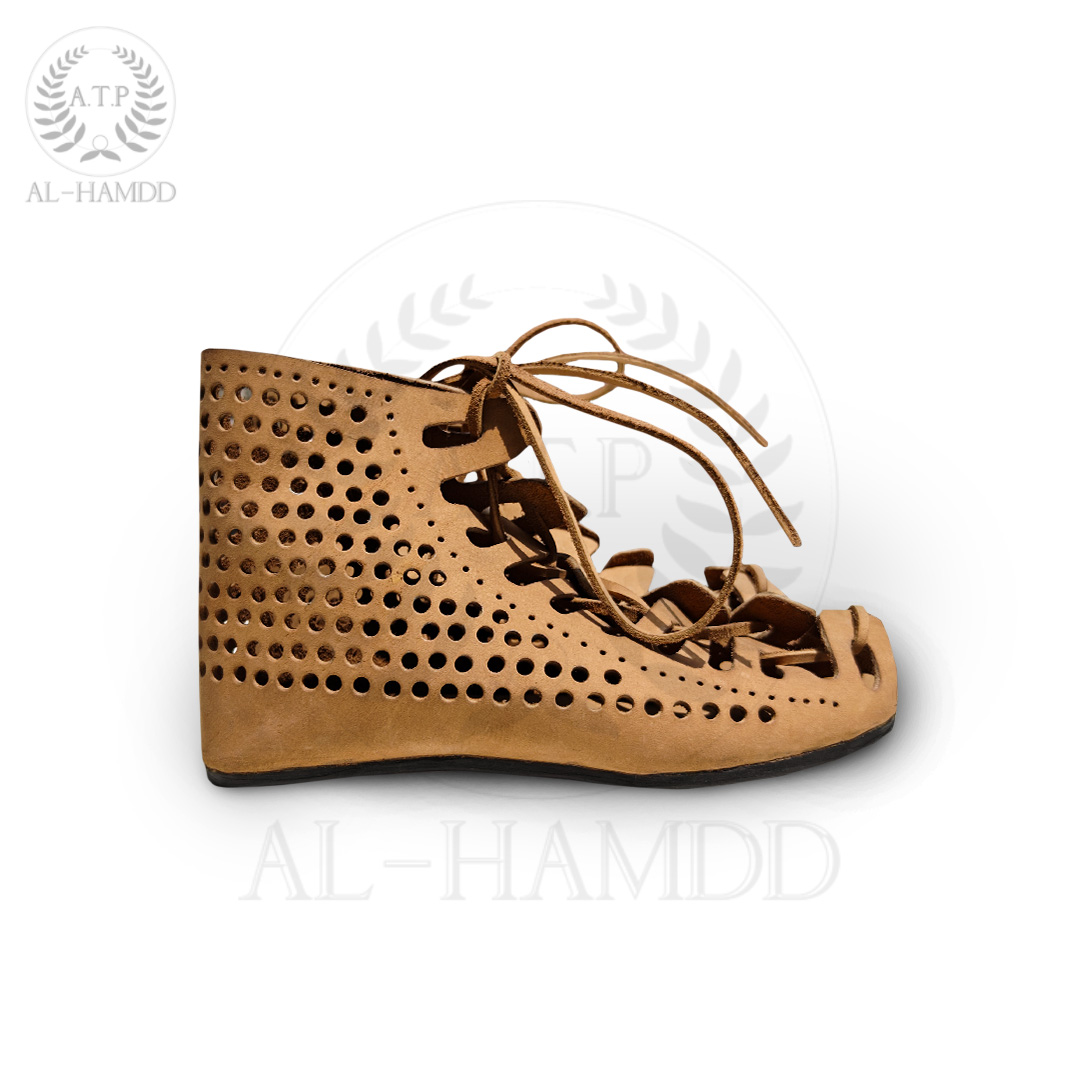
Germanic Calcei Boots | Roman Reenactment Footwear
Price range: $60.00 through $70.00This product has multiple variants. The options may be chosen on the product pageKey Points –
– Available in sizes between US8 to US13.
– 2mm thick vegetable-tanned leather upper.
– 4mm thick heavy-duty leather sole.
– Leather Laces.
– Hand Stitched.
– Available in Natural (unstained) and Black colors.
– Gross weight – 2.1 PoundsDescription –
Germanic Calcei Boots, as the name suggests, were specifically designed for military men who endured the harsh outdoor conditions. The Roman soldiers had to walk hundreds of miles during the Christian crusades and other territorial expeditions. The design of these boots covers the entire foot and has a hard sole for difficult terrains across the European lands. The shoes have holes all around the foot for proper ventilation and air movement. They have a high-ankled design to give additional support for walking/running across rugged terrains.The leather thongs used in the shoes have a square section. Historically, it is believed that all the laces for all types of shoes were made from leather scraps left over after shoe production.
-

Hodhill Sword | Roman reenactment sword
$160.00The Hodhill Sword is an intricate weapon from the Roman era. It was mainly used by the auxiliaries for cutting and not for slashing.
The sword is believed to be used by high-ranking Roman army officers. The original artifact of this sword was found in Hodhill, Dorset, England during the first century AD. Although the sword is believed to be used in the Roman period it also has elements from the Celtic period as well, especially the hilt. The hilt of the sword is made with several small parts joined together to attain the final shape. The brass decorations make this sword an artistic weapon. -
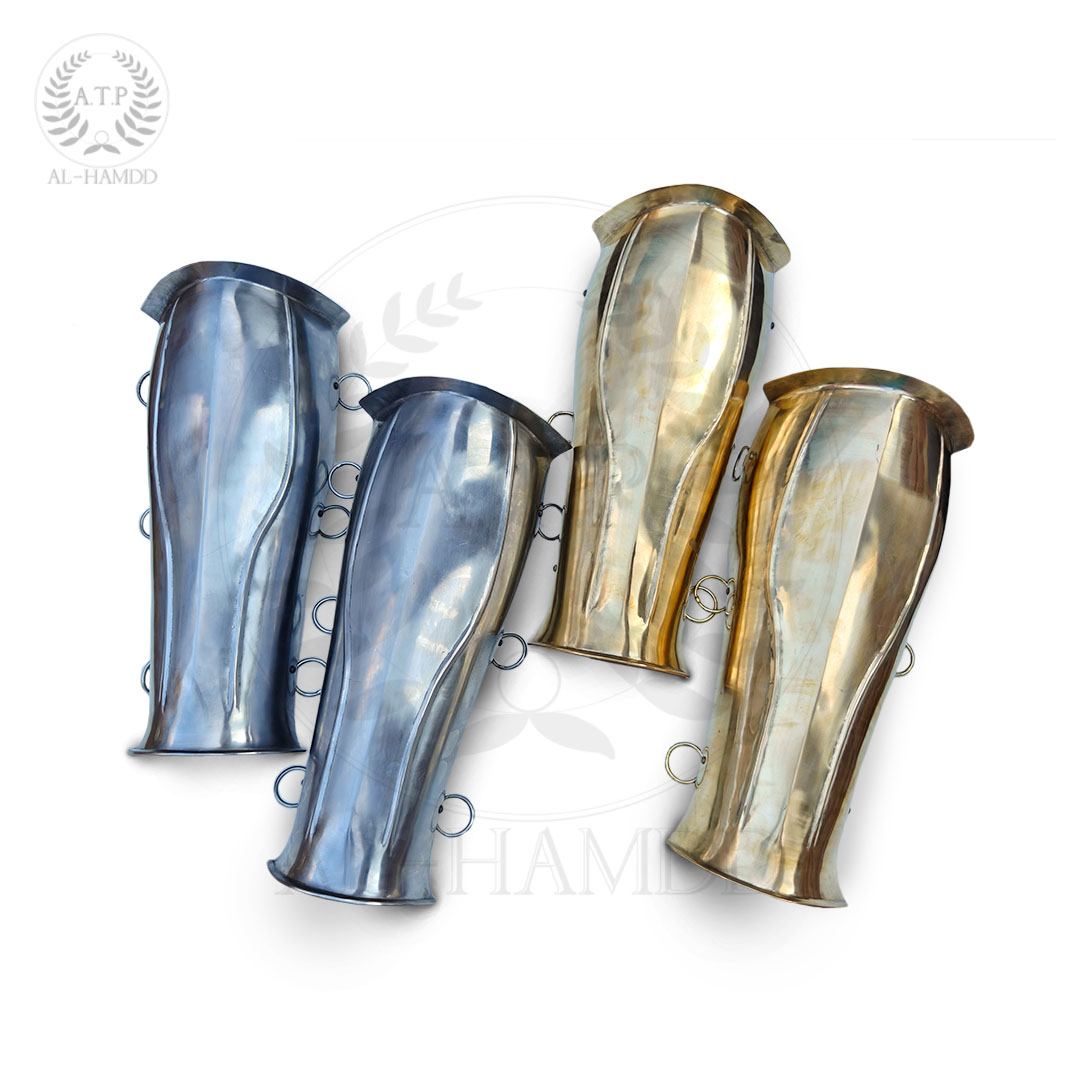
II Century Roman Greaves | Late Roman Greaves
Price range: $100.00 through $150.00This product has multiple variants. The options may be chosen on the product pageKey Points –
– Length – 40cm
– Calf width (maximum) –
– Ankle width (minimum) –
– Hand-embossed
– 25mm inner diameter rings on the pairDescription –
II Century Roman Greaves are believed to have been used during the II and the III centuries AD. They are short greaves and do not have a knee plate. They were probably worn by foot soldiers of the Roman army/cavalry. The design and shape of the greeves were kept simple and functional; they provide better mobility but lesser protection against impact. Some artefacts of these greaves also show the use of chain links for fastening, but this model comes with flat leather thongs. -
Sale!
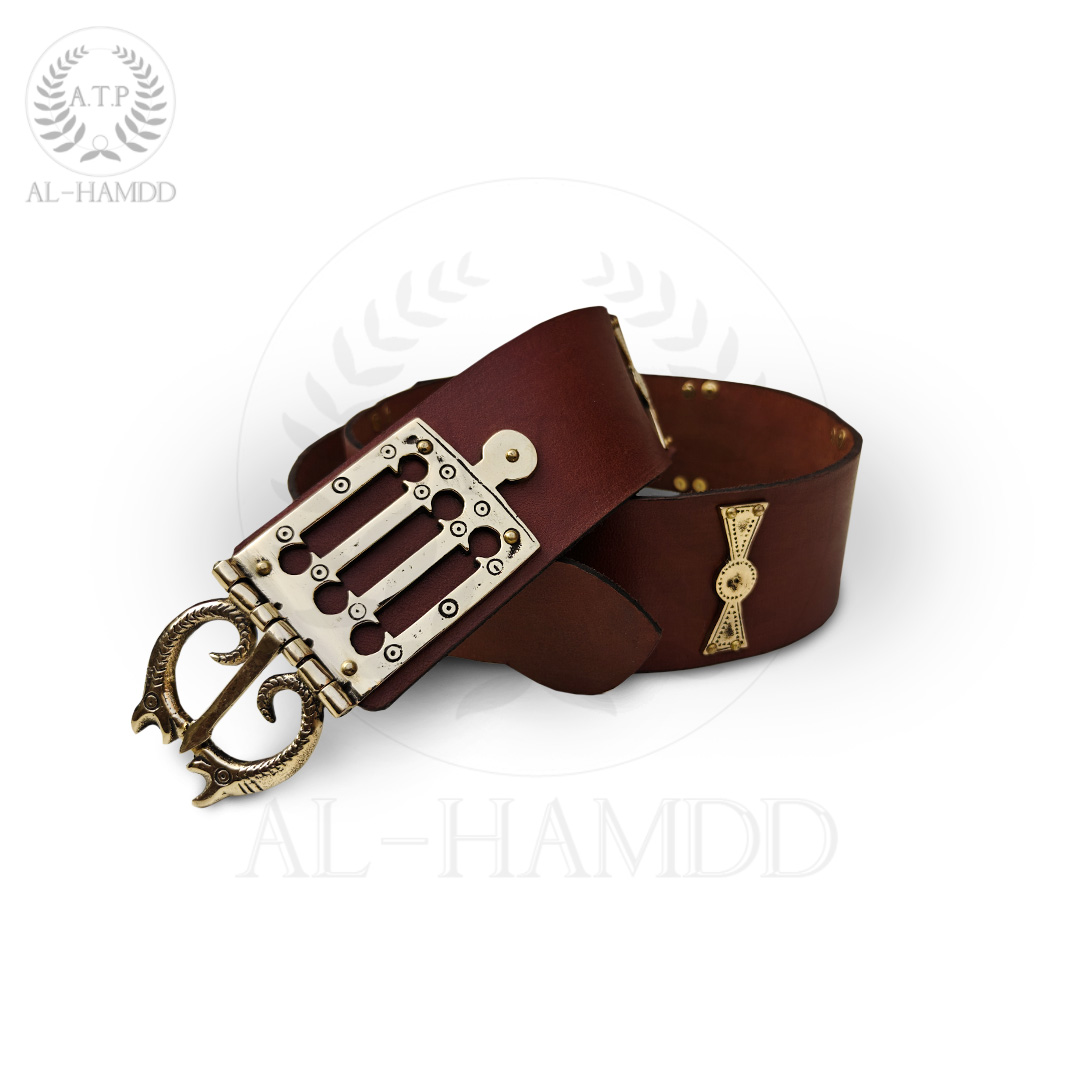
IV Century Roman Belt | Reenactment Balteus
Original price was: $32.00.$26.00Current price is: $26.00.This product has multiple variants. The options may be chosen on the product pageKey Points –
– Gross length – 120cm
– Width – 5.5cm
– Gross weight – 0.75 Pounds
– Thickness of brass stiffeners – 1.5mm / 16g
– Leather thickness – 3mmDescription –
The IV Century Roman Belt is an accessory of the Roman military attire and an important part of the equipment for the sword. The belt comes with eight stiffeners to keep it sturdy and capable of handling the weight of the sword. The belt buckle is designed with serpentine heads and an arrow-shaped pin. -
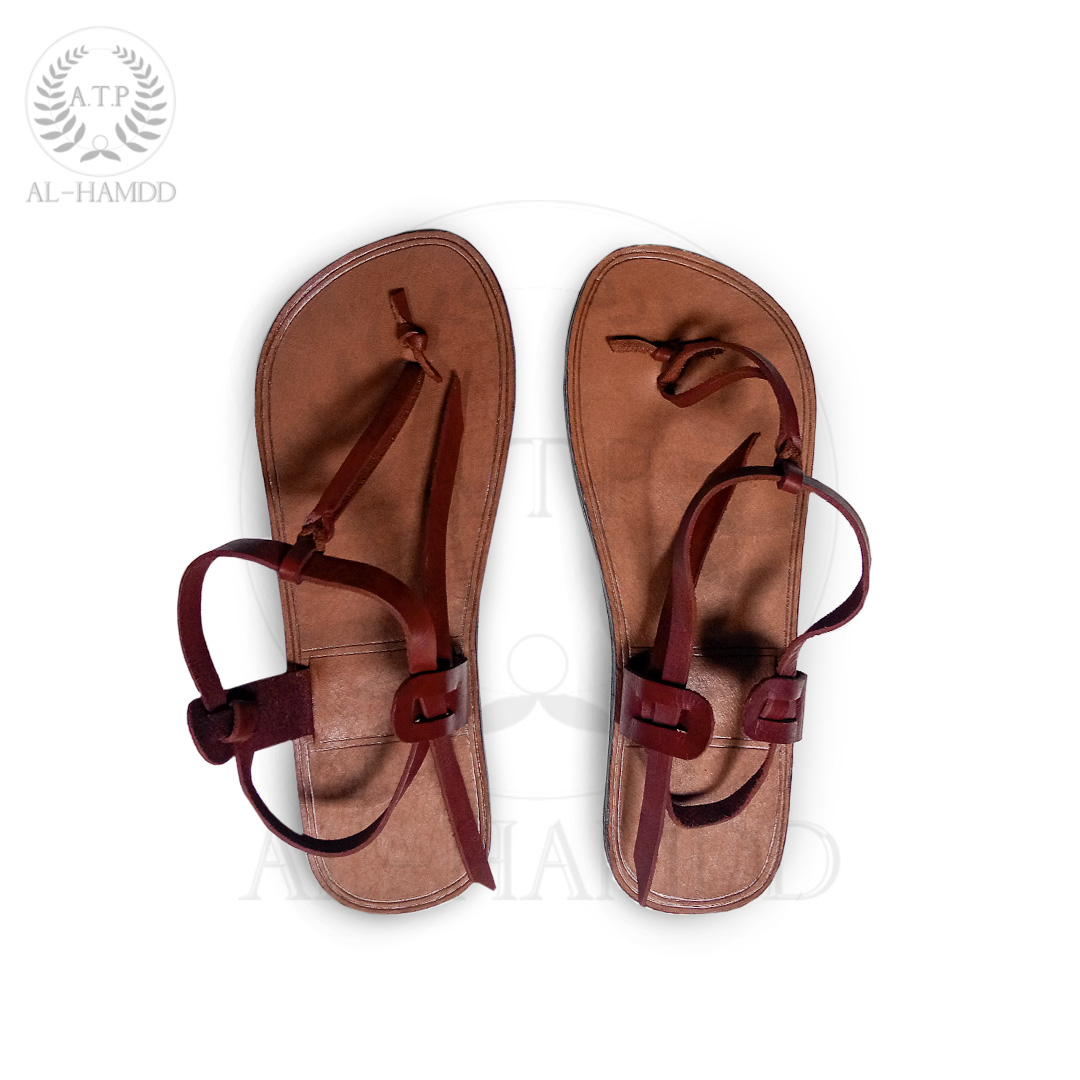
IV Century Sandals | Inspired by Louvre Museum
$50.00This product has multiple variants. The options may be chosen on the product pageKey Points –
– 2mm thick vegetable-tanned leather upper.
– 4mm thick heavy-duty leather sole.
– Leather Laces.
– Hand Stitched.
– Available in three color options. Custom colors are also available on special request.Description –
The IV Century Sandals are a pair of reenactment leather sandals from the Roman era and inspired by the artefact in the Louvre Museum. The pair of sandals were used by the local folk of the Roman Empire. -

Jarak helmet | Berkasovo Type Roman Helmet
$350.00The Jarak helmet belongs to the family of Berkasovo-type helmets due to its similarities in the overall construction details and the decorations. As per relevant scholarly references, the helmet was found in a clay pot. A farmer found the clay pot while plowing his lands in the province of Srem, Serbia. The helmet was later purchased by the Vojvodjanski Museum, Novi sad, Serbia. The Jarak helmet is believed to have been used during the 4th century AD by one of the officers of the Licinius Army. The actual ownership of the helmet is uncertain as the place of excavation was a hotbed of conflicts in history. It is categorized as a Roman helmet due to its similarities to the Berkosovo-type helmets. The original find of the helmet has silver rivets and traces of silver gilding on the helmet bowl. Interestingly, there are no traces of any precious stones attached to the helmet.
-

Knife-Spoon combination cutlery | Antique cutlery | Set of 6
Price range: $50.00 through $90.00This product has multiple variants. The options may be chosen on the product pageKey Points –
– Made by the Sand-Casting method
– Assembled by hand
– Shiny polish
– Length is ergonomic
– Weight – 0.12 PoundsDescription –
A replica of the Knife-Spoon combination crafted in sand-cast pure brass. The original artifact was found in Vindonissa, Switzerland, and is believed to have been used in the early Roman period. This is an exquisite piece of cutlery made of pure brass and manufactured by using the sand-casting technique. A motif shaped like a lion’s head, symbolic in Roman culture, is placed at the center of the item. On one side of the item is a spoon, and on the other side is a knife. -

Koblenz Helmet
$250.00Roman Koblenz Helmet
Koblenz helmet is a ridged helmet used in the late Roman era, i.e. I century AD. This helmet shares some features with the helmets found in Burgh Castle like Berkosovo and Jarak Helmets. Unlike Berkosovo and Jarak helmets, this is a simpler design with less intricate details. Ear guards are made with an embossed design and are attached with leather belts similar to its ‘original’ found in Koblenz, Germany. This replica is made in two layers (iron and brass), brass sheet has an embossed design.
-
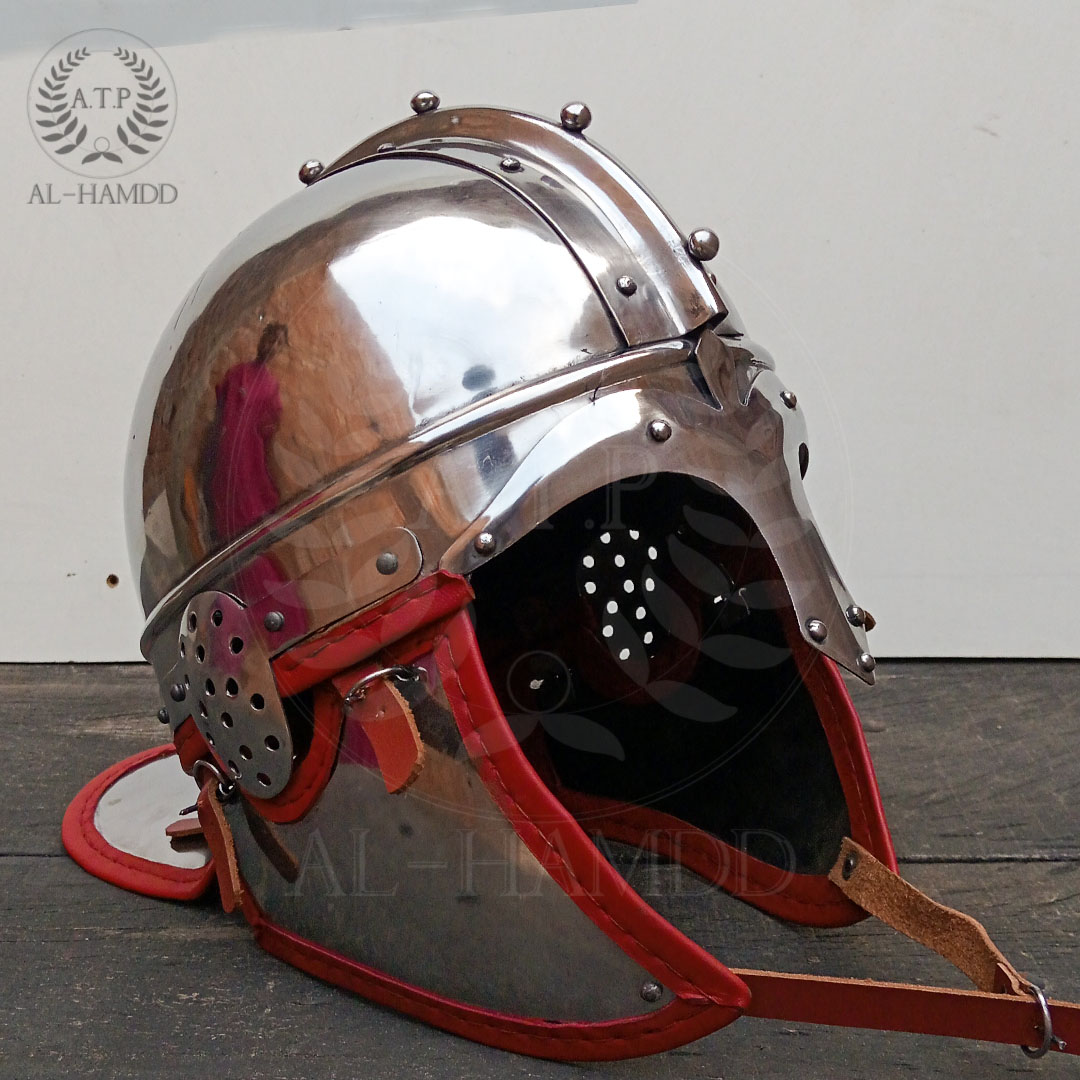
Koblenz type Steel Helmet | Roman reenactment helmet
$150.00Koblenz helmet is a ridged helmet used in the late Roman era, i.e. I century AD. This helmet shares some features with the helmets found in Burgh Castle like Berkosovo and Jarak Helmets. Unlike Berkosovo and Jarak helmets, this is a simpler design with less intricate details. Ear guards are made with an embossed design and are attached with leather belts similar to its ‘original’ found in Koblenz, Germany. This replica is made in two layers (iron and brass), the brass sheet has an embossed design.