-

Coolus Buggenum Helmet
$150.00Coolus Buggenum Helmet
The Coolus Buggenum helmet was a cavalry helmet during the roman era. One of the original artifacts was found in the river Waal and that connects this helmet to the Coolus Mannheim’s helmet. The rim of the helmet is folded on the inside to prevent any roughness. The helmet has simple cheek guards and a plume holder. A single belt-to-buckle attachment as a chin strap was given to the helmet to keep it firm on the head of the cavalrymen.
-

Coolus helmet type G
Price range: $125.00 through $200.00This product has multiple variants. The options may be chosen on the product pageCoolus helmet type G is believed to have been used during the third quarter of the I century AD. The original helmet was found in excavations in Drusenheim, near Haguenau in Alsace. Scholars believe that the original helmet was worn by a soldier belonging to the 4th Legion of Macedonia. The original helmet was found in brass but there are variations of the same helmet in bronze as well. This type of helmet was used by the Roman army and therefore was constructed in large numbers. The modern-day replicas of this helmet are mainly found in steel and brass.
-

Coolus Mannheim Helmet
$140.00The Coolus Mannheim helmet was a cavalry helmet during the Roman era. The original artifact of the Coolus helmet was found in the river Marne of Coolus and this is from where it got its name. It is also known as the Coolus Mannheim (Type A) by Schaff. The helmet is shaped like a hat with slight neck protection. The rim of the helmet is folded on the inside to prevent any roughness. A single belt-to-buckle attachment was given to the helmet to keep it firm on the head of the cavalrymen.
-
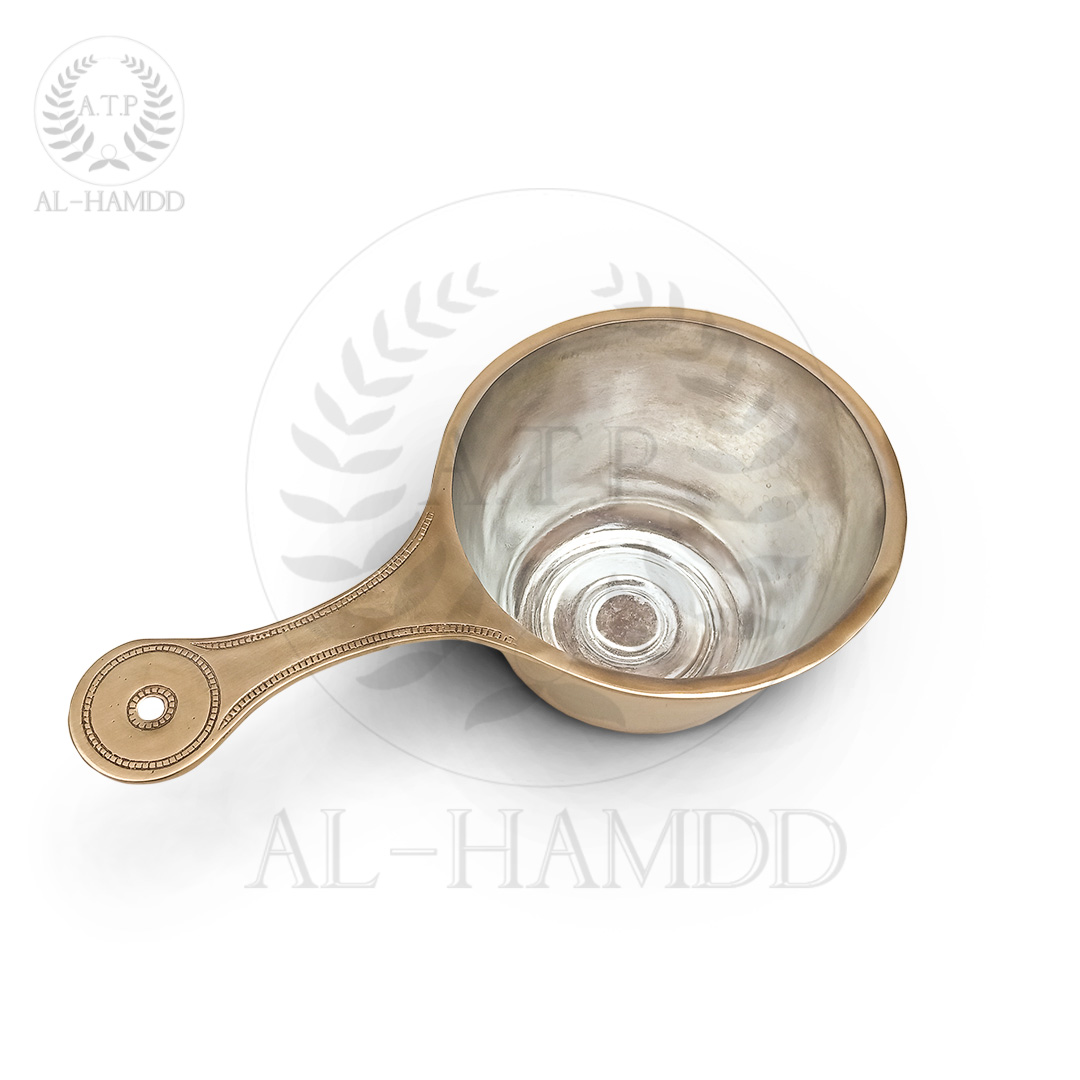
Deep Roman Patera | Brass Cooking Pan for Reenactment
$75.00Key points: –
Period – 2-5th Century A.D
Mouth diameter– 15 cm
Bottom diameter-10 cm
Height – 11 cm
Weight – 1.54 pounds
Handle length- 13cm
Volume – 1.2 litres
Base Material – BrassInspired by ancient Roman design, the Deep Roman Patera is a striking piece of kitchen antiquity that beautifully unites history with modern functionality. Traditionally used in Roman households and campsites, this versatile pan was prized for preparing water-based dishes—ideal for boiling, simmering, and slow cooking.
What truly distinguishes this piece is its thoughtfully refined structure. Reimagined from the classic Roman Patera, it features a deeper bowl with a slightly narrower rim, preserving the original capacity while enhancing ease of use and control during cooking. The grooved base not only elevates its aesthetic appeal but also strengthens the pan’s durability and promotes even heat distribution, making it well-suited for contemporary stovetops. A seamless blend of heritage craftsmanship and practical design, the Deep Roman Patera is more than cookware—it is a timeless culinary artifact, bringing the essence of ancient tradition into the modern kitchen.
-

Embossed Verona greaves | Legionary Quintus greaves
$150.00Key Points –
Hand-made and Hand-Embossed
Delivery in 1-2 weeks
Weight per pair – 5.75 Pounds
Overall Length – 49cm
Fits a calf circumference of 45-50cm
Padded on the inside
Additional brass edging for protectionDescription –
The stone inscription inspires the embossed Verona greaves in a monument in Cisolino, Verona, Italy. The stone monument has the famous Roman Legion Soldiers, Quintus Sertius Festus, and Lucius Sertorius. The pair of greaves is seen on the legs of the Centurion Quintus and therefore has a valid historical value. The embossed or decorated greaves were specially designed for high-ranking officers of the Roman army, while other soldiers were given simpler greaves that were easier to mass-produce. -

Engraved Waist Bag | Leather Accessory | Unisex
$25.00Engraved Waist Bag is an accessory product for the reenactors and enthusiasts. Historically, it was a utility product that was used by the military forces and other officials to carry small items like documents, currency, etc. Therefore, the bag was also known as a coin bag. The size of the bag is large in comparison to coin bags across various timelines, but currency was an important item. The bag was worn on either side of the waistbelt buckle for ease of access. The belt passes through a fixed loop at the back of the bag.
-

Etruscan Negau Helmet
Price range: $150.00 through $200.00This product has multiple variants. The options may be chosen on the product pageKey Points –
– Make of 1.2mm metal sheet
– Head Size – 19x23cm
– The helmet is painted in black color on the insideDescription –
The Etruscan Negau Helmet is one of the 26 helmets that were found in the cache of Zenjak, Duchy of Styria (currently Slovenia). The original of this helmet was found in bronze metal and also had an inscription with Greek letters. The inscription shows that the helmets were used by priests and were buried ceremonially. The shape of the helmet resembles the helmets used during the Etruscan period. -

Foldable Baking Pan
$55.00The Foldable Baking Pan belongs to the Roman period and is believed to be used in both households as well as camp sites. The special feature of the baking pan was its folding handle, which made it easier to carry during camping expeditions. The pan is a shallow-depth cooking utensil, basically used for baking bread. The pan can also be used to stir fry vegetables and other edible items.
-

Four Bowl Baking Pan
$65.00Four Bowl Baking Pan
The Four Bowl Baking Pan belongs to the Roman period and was purposefully used to bake bread in four equal portions of aesthetic size and shape. The bowls gave the bread a domed shape. The size of each bowl is suitable for one bread portion to be used for a single person or for a single meal. The long handle of the pan allowed the baker to insert the pan into the oven and out. Since the pan was used in camps as well, a sturdy ring was attached at the rear end to make the transport easy.
-
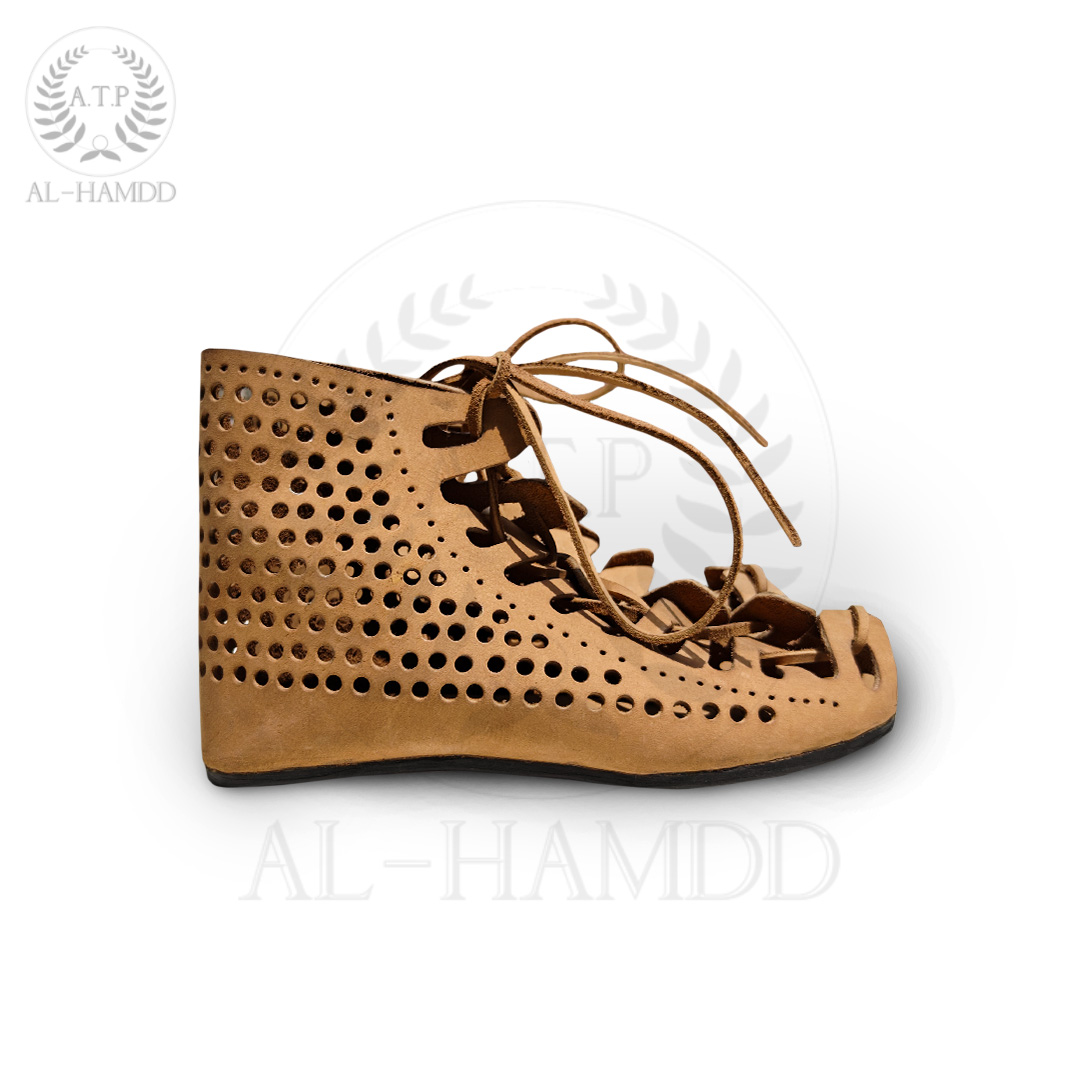
Germanic Calcei Boots | Roman Reenactment Footwear
Price range: $60.00 through $70.00This product has multiple variants. The options may be chosen on the product pageKey Points –
– Available in sizes between US8 to US13.
– 2mm thick vegetable-tanned leather upper.
– 4mm thick heavy-duty leather sole.
– Leather Laces.
– Hand Stitched.
– Available in Natural (unstained) and Black colors.
– Gross weight – 2.1 PoundsDescription –
Germanic Calcei Boots, as the name suggests, were specifically designed for military men who endured the harsh outdoor conditions. The Roman soldiers had to walk hundreds of miles during the Christian crusades and other territorial expeditions. The design of these boots covers the entire foot and has a hard sole for difficult terrains across the European lands. The shoes have holes all around the foot for proper ventilation and air movement. They have a high-ankled design to give additional support for walking/running across rugged terrains.The leather thongs used in the shoes have a square section. Historically, it is believed that all the laces for all types of shoes were made from leather scraps left over after shoe production.
-

Greek Corinthian Helmet | Reenactment Helmet
Price range: $210.00 through $300.00This product has multiple variants. The options may be chosen on the product pageKey Points –
– Made of 1.2mm sheet metal
– Head Size – 19x23cm
– Leather hand-stitched lining for the crest box
– Natural horse hair is used for the crestDescription – The Greek Corinthian Helmet belongs to one of the oldest ages of combat, where helmets were being used. The Corinthian helmet got its name from the place of excavation in Corinth. The original helmet was found in bronze. The earlier forms of the helmet were of a more open form; it did not cover the entire head of the user. The Greek hoplites used to pull back their helmets to rest on their foreheads for comfort during the rest/stroll hours. The shape of the helmet is more ovoid than hemispherical. The slits for the eyes and the rest of the face are proportional, they give ample space for vision and ventilation.
-

Greek Hoplite Anatomical Greaves | Reenactment Armor | Replica
Price range: $180.00 through $240.00This product has multiple variants. The options may be chosen on the product pageKey Points –
– Overall Length (ankle to knee top) – 47cm
– Outside Calf Circumference (widest) – 48cm
– Ankle circumference – 28cm
– Material Thickness – 1mm
– Padding – Foam+suede leather lining
– Edging – Goat leatherDescription –
The pair of Greek Hoplite Anatomical Greaves is one of the designs in which the shape is aligned with the natural shape of the human leg. This design of the greaves has a natural knee profile with the knee socket made in a prominent shape. This is a more intricate and prominent design as compared to the companion designs, as it also features impressions on both sides. The Greaves are parts of the armor that protect the shin bone, also known as the Tibia. -

Greek Kopis Sword | Korfu Kopis | Reenactment Sword
$165.00This product has multiple variants. The options may be chosen on the product pageThe Greek Kopis Sword was an alternate blade used by the Greek hoplites for slashing purposes. The Greek Kopis Sword is relatively long, single-edged, and has a curved blade. The historical references of this sword are seen on Greek sculptures and other museum replicas. The historical references miss out on the design of the hilt. It is evident that the blade was widest at the cross guard and the blade went through the cross-guard into the handle. It is evident from the historical findings that a part of the hilt was made of organic material while the cross-guard was made of iron. There is some debate that the original blade of the sword might also be made of bronze like other historical Greek weapons but the use of steel is more relevant. Our replica of the Greek Kopis Sword has a brass hilt with a horse-head pommel at the top.
-

Greek Reenactment Sandals | Historical leather footwear
Price range: $60.00 through $65.00This product has multiple variants. The options may be chosen on the product pageKey Points –
– Available in sizes between US8 and US13.
– 2mm thick vegetable-tanned leather upper.
– 4mm thick heavy-duty leather sole.
– Leather Laces.
– Hand Stitched.
– Available in three colors.
– Gross weight – 2.2 PoundsDescription –
The Greek Reenactment Sandals are a versatile pair of footwear that can be used by Greek hoplites as well as Roman reenactors. Footwear was primarily designed for the rich and military men, but it was also fashioned by civilians or countrymen. These are high-ankle sandals with a mesh/perforated design to give breathable comfort to the user. The soldiers preferred these sandals in warm/tropical climates over military boots for comfortable use. Some historical findings also show that the cavalrymen wore woolen/cotton socks with these sandals. The Caligae sandals were also designed with hobnails of various shapes and patterns; there are flat, bulbous, and even conical hobnails in various historic literature. Hobnails provided better traction on the ground and also became an additional fighting aid during close combat situations. -

High Ankle Greek Sandals | Leather reenactment footwear
$50.00This product has multiple variants. The options may be chosen on the product pageKey Points –
– 2mm thick vegetable-tanned leather upper
– 5mm thick heavy-duty leather sole
– Leather lacesDescription –
The pair of High Ankle Greek Sandals is inspired by the footwear of the Greek era. Footwear has been an important part of military equipment as it provides comfortable tread for the warriors. Sandals are open footwear that became trendy very quickly due to their comfort and ease of use. Our pair of sandals has a high ankle and closed-side design. They are open on the front portion so that the toes are exposed. For fastening, the sandals are provided with leather laces at the top end of the ankle part. -

Hodhill Sword | Roman reenactment sword
$160.00The Hodhill Sword is an intricate weapon from the Roman era. It was mainly used by the auxiliaries for cutting and not for slashing.
The sword is believed to be used by high-ranking Roman army officers. The original artifact of this sword was found in Hodhill, Dorset, England during the first century AD. Although the sword is believed to be used in the Roman period it also has elements from the Celtic period as well, especially the hilt. The hilt of the sword is made with several small parts joined together to attain the final shape. The brass decorations make this sword an artistic weapon.